
Ice Ultra: 230km of Snow, Silence and Survival
The Ice Ultra by Beyond the Ultimate is a 230km multi-day race across the wild tundra of the Swedish Arctic. Having already completed two races with BTU, I knew I was in safe hands. However, that wasn’t the real reason I signed up.
I had previously raced across the Sahara at the Marathon des Sables and through the Namib Desert in Namibia at the Desert Ultra. Both races tested my resilience, but there was still a sizeable part of me operating within my comfort zone. I run well in the heat and, although those environments were challenging, they were also familiar territory. The obvious progression for me was to go to the other extreme. There is very little comfort to be found in the Arctic Circle, and I knew that if I really wanted to test myself, this was where I needed to be.
Arrival in Sweden
I flew out to Luleå a couple of days early to meet some of the other competitors. When we landed it was −28°C, which immediately reminded me that this race would be very different from anything I’d done before. From there we needed to catch a train to the race meeting point in Gällivare. Thankfully we had allowed ourselves an extra day because the train was cancelled, and we ended up sharing a three-hour taxi ride north instead. Fortunately the train company picked up the bill — all £1000 of it — and we travelled in convoy with two cars between us.
Race meet day arrived and the hotel lobby quickly filled with competitors, creating a real buzz of excitement and nervous anticipation. Suddenly everything felt very real. After a 90-minute coach journey further north, kit checks were completed and race director Kris King delivered the race briefing.
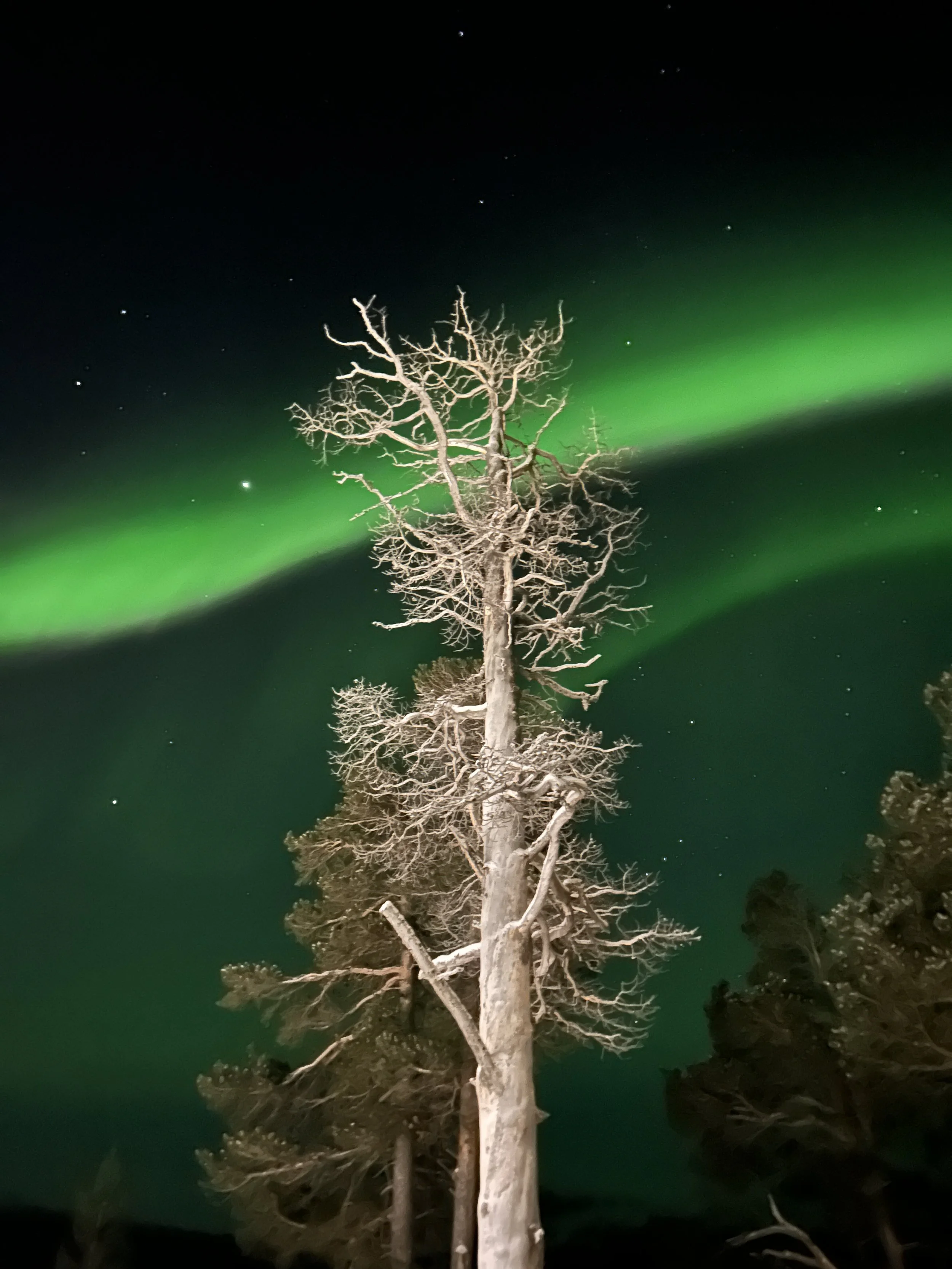
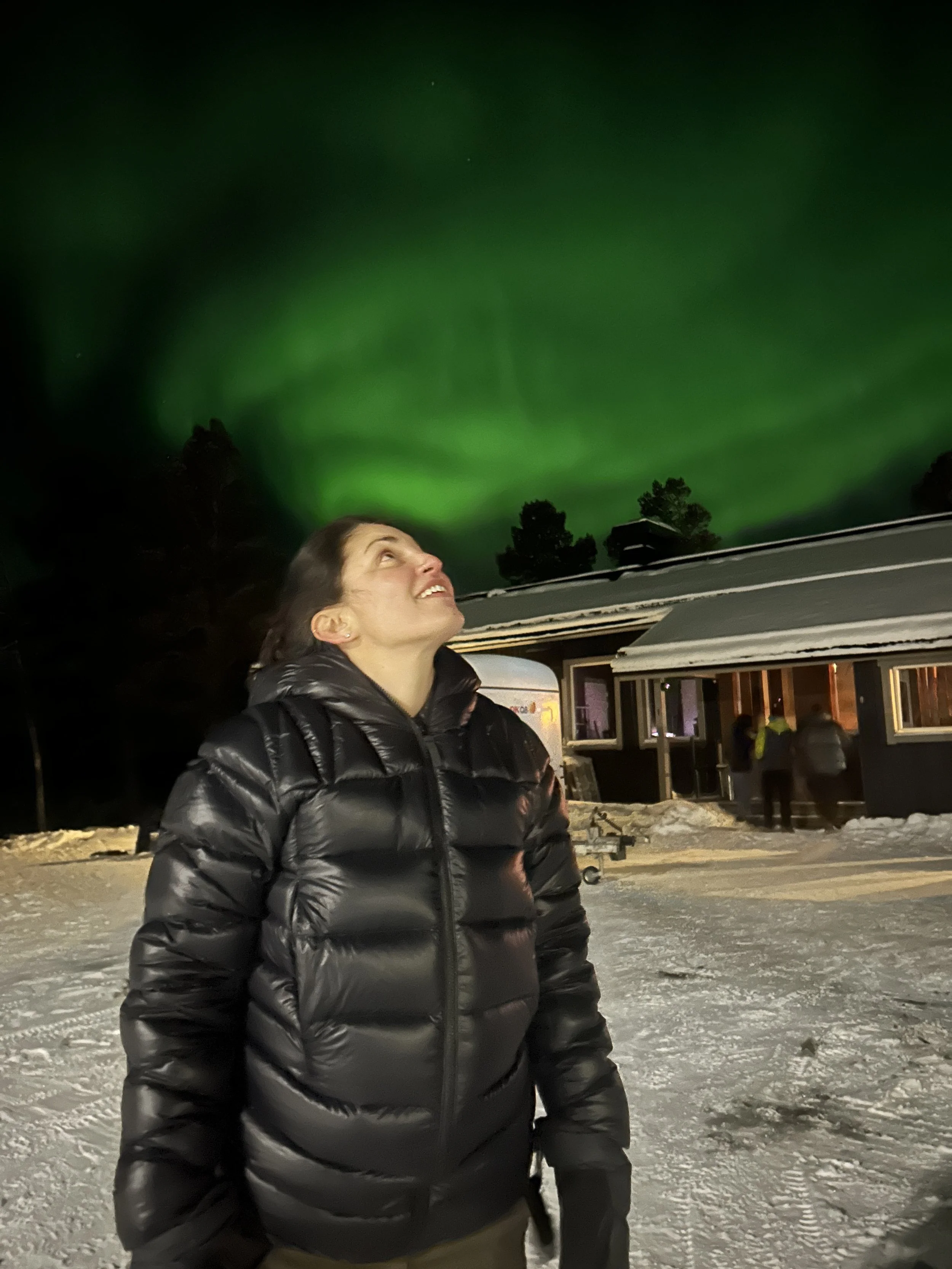
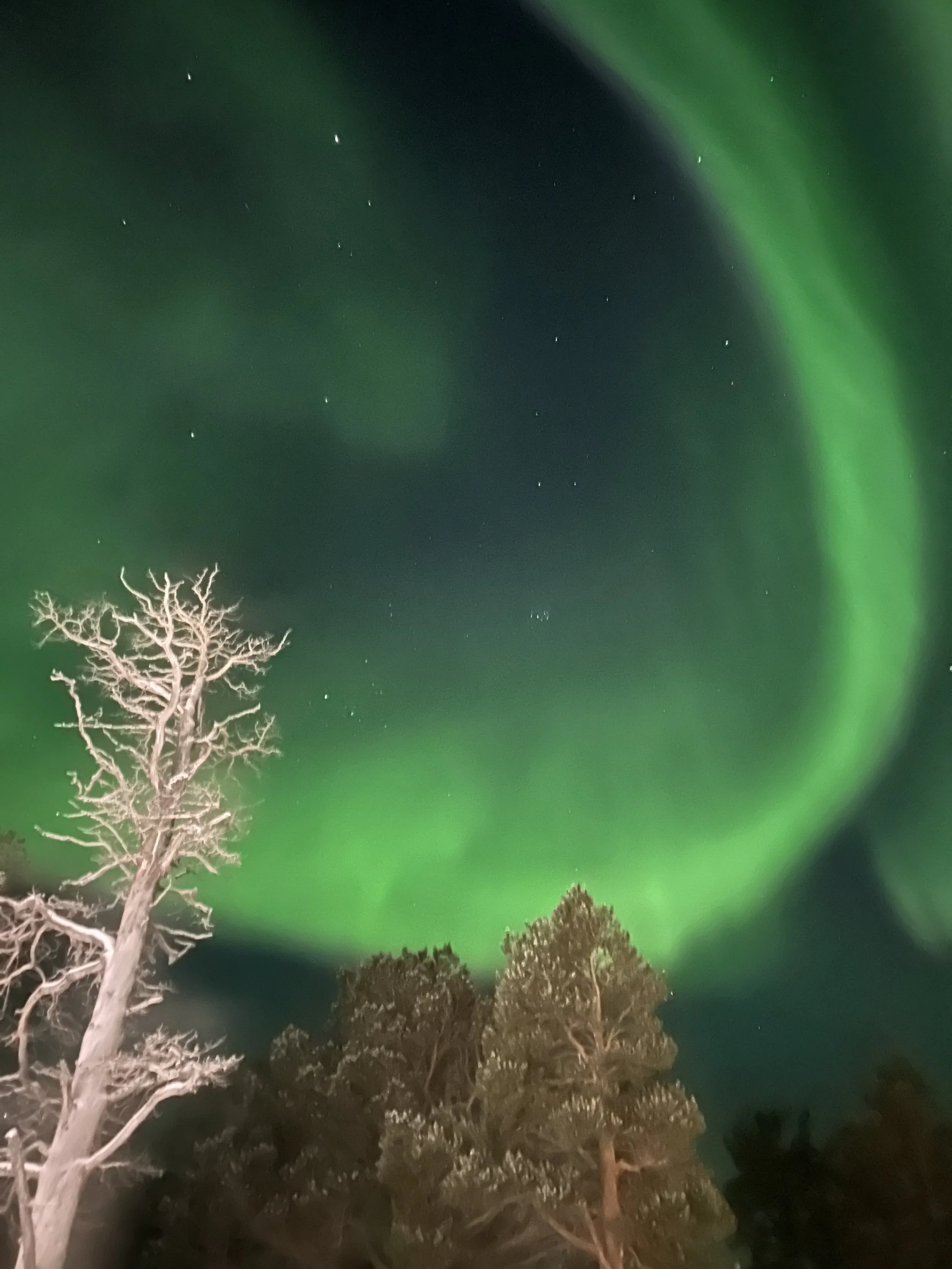
That evening we were treated to the most incredible display of the Aurora Borealis. Even now I struggle to find the words to do them justice. I video-called my children and my partner so they could catch a glimpse of the lights too, but sadly they didn’t translate well through an iPhone screen. It was one of those moments that simply has to be experienced in person.
Shortly afterwards we were ushered outside to our accommodation for the night — a teepee with no fire or groundsheet, just a reindeer skin and our sleeping bags. I have quite literally never been so cold in my life, and needless to say I didn’t sleep a wink that night. I don’t think anyone did. This, apparently, was our race preparation for Stage 1.
Stage 1 – Kungsleden
50km | 1355m elevation | 10hrs 40mins
At 7:30am we were finally underway. The first day was always going to be about taking things steady, learning the terrain and understanding the conditions while trying not to make any big mistakes. Our packs were at their heaviest and we still had 230km ahead of us, so this was certainly not the day for heroics.
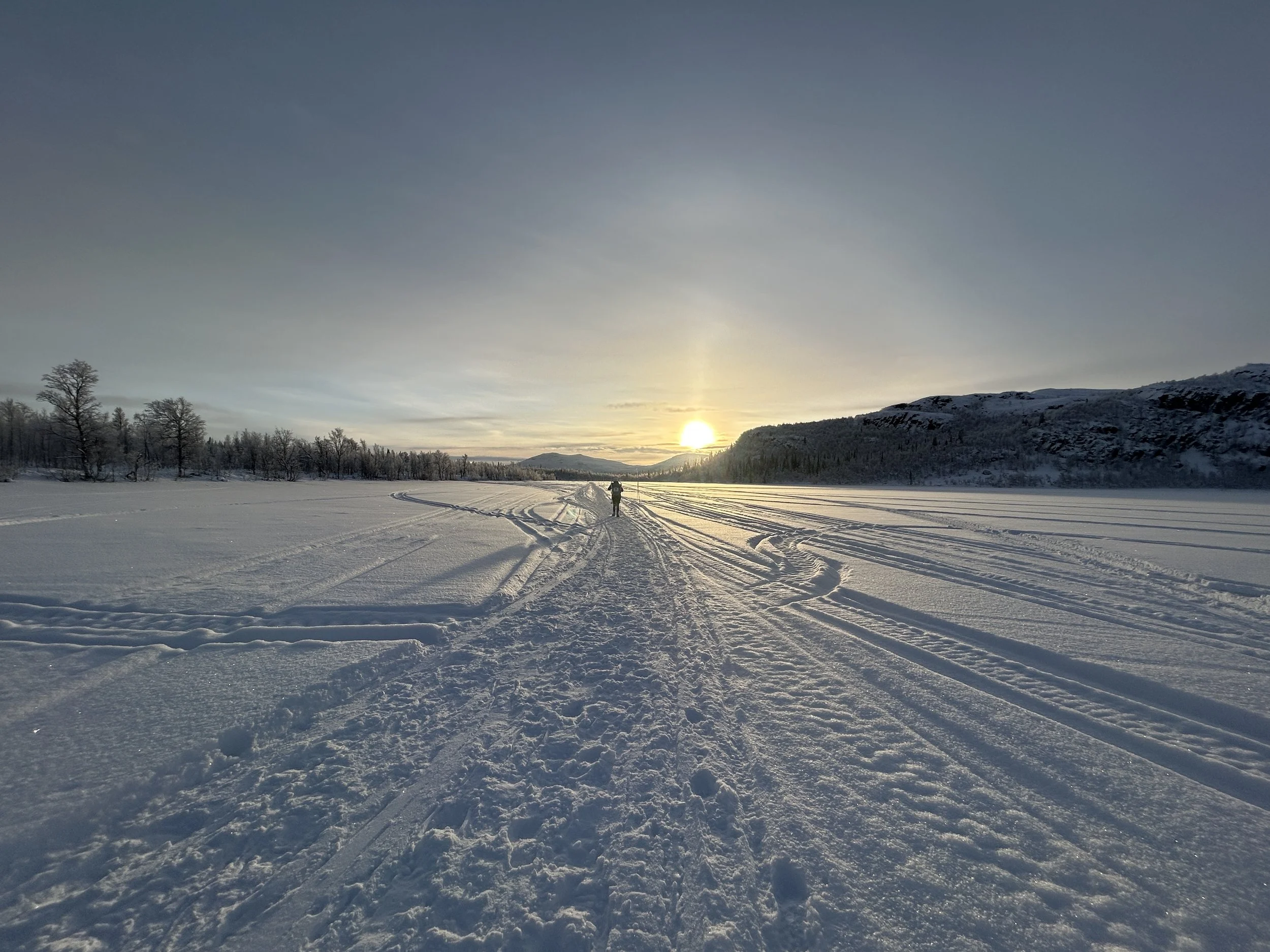
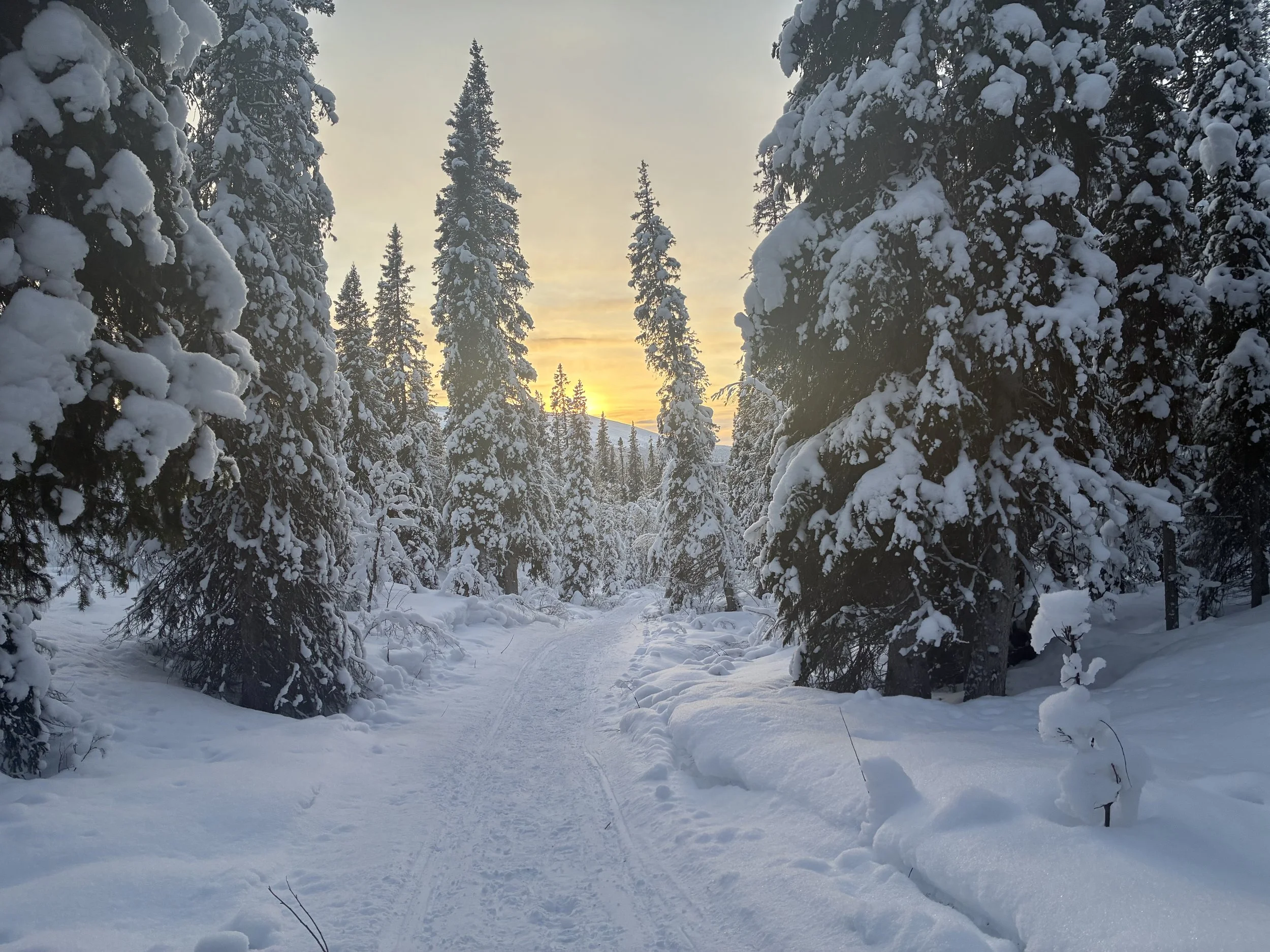
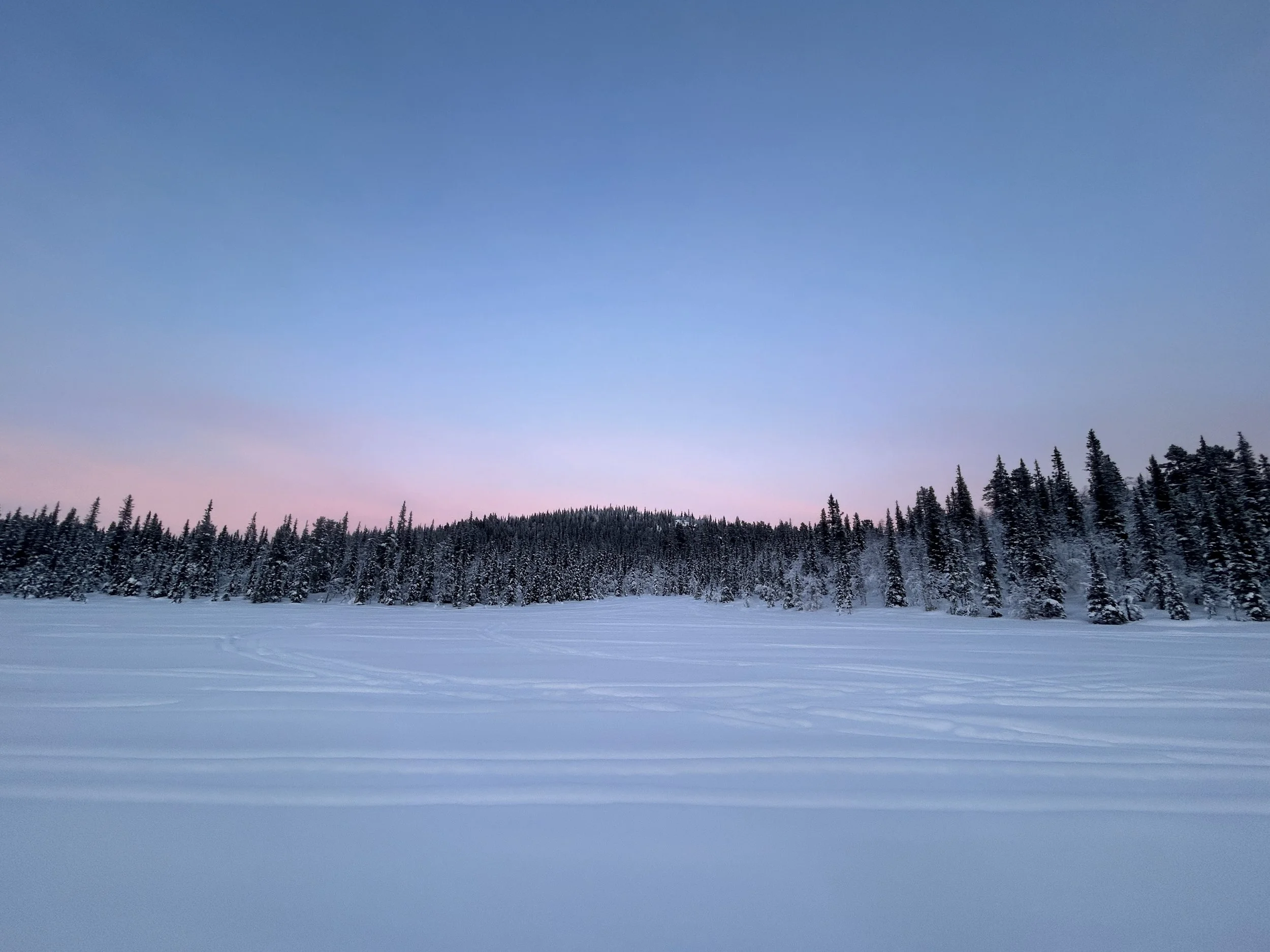
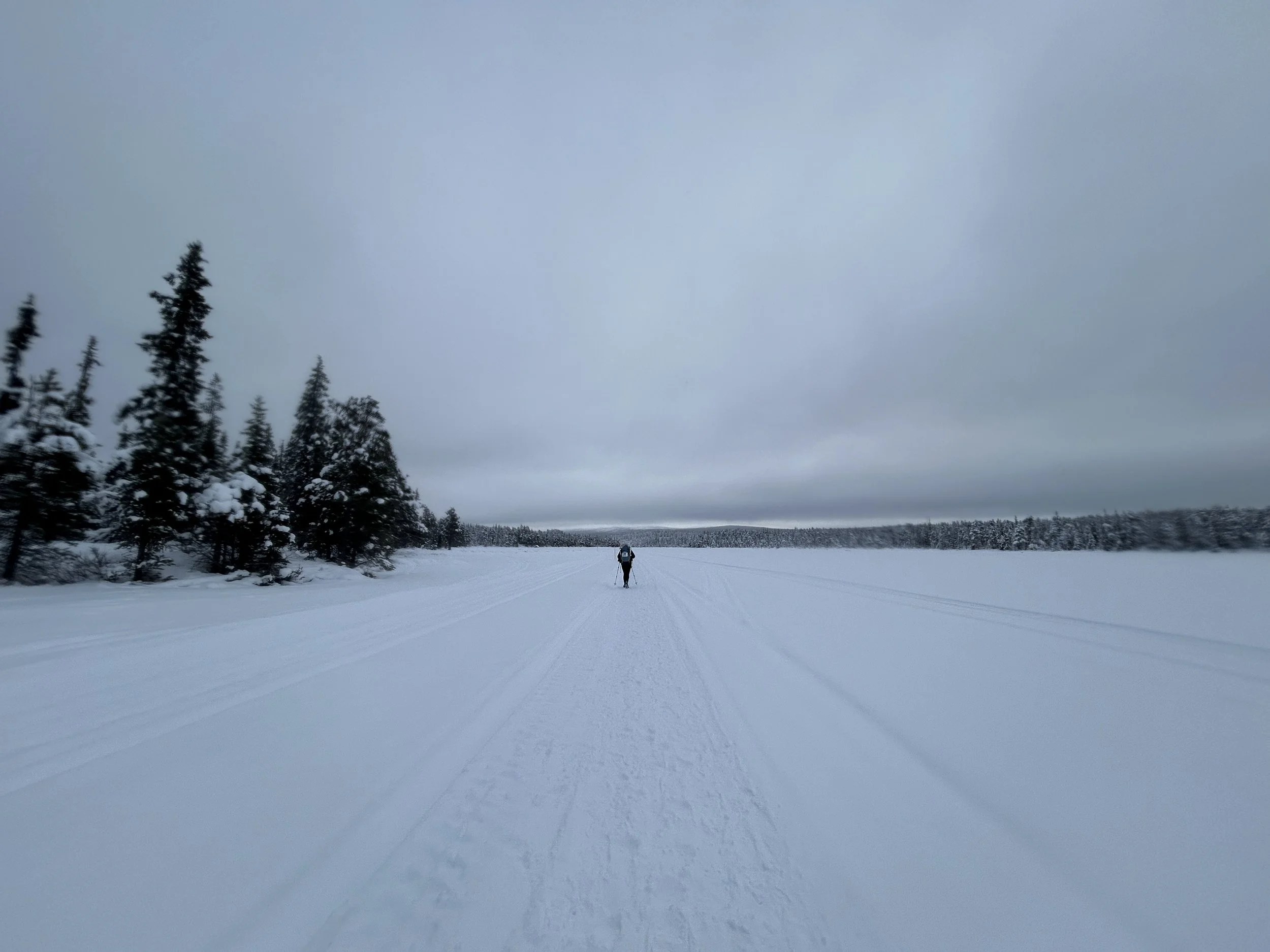
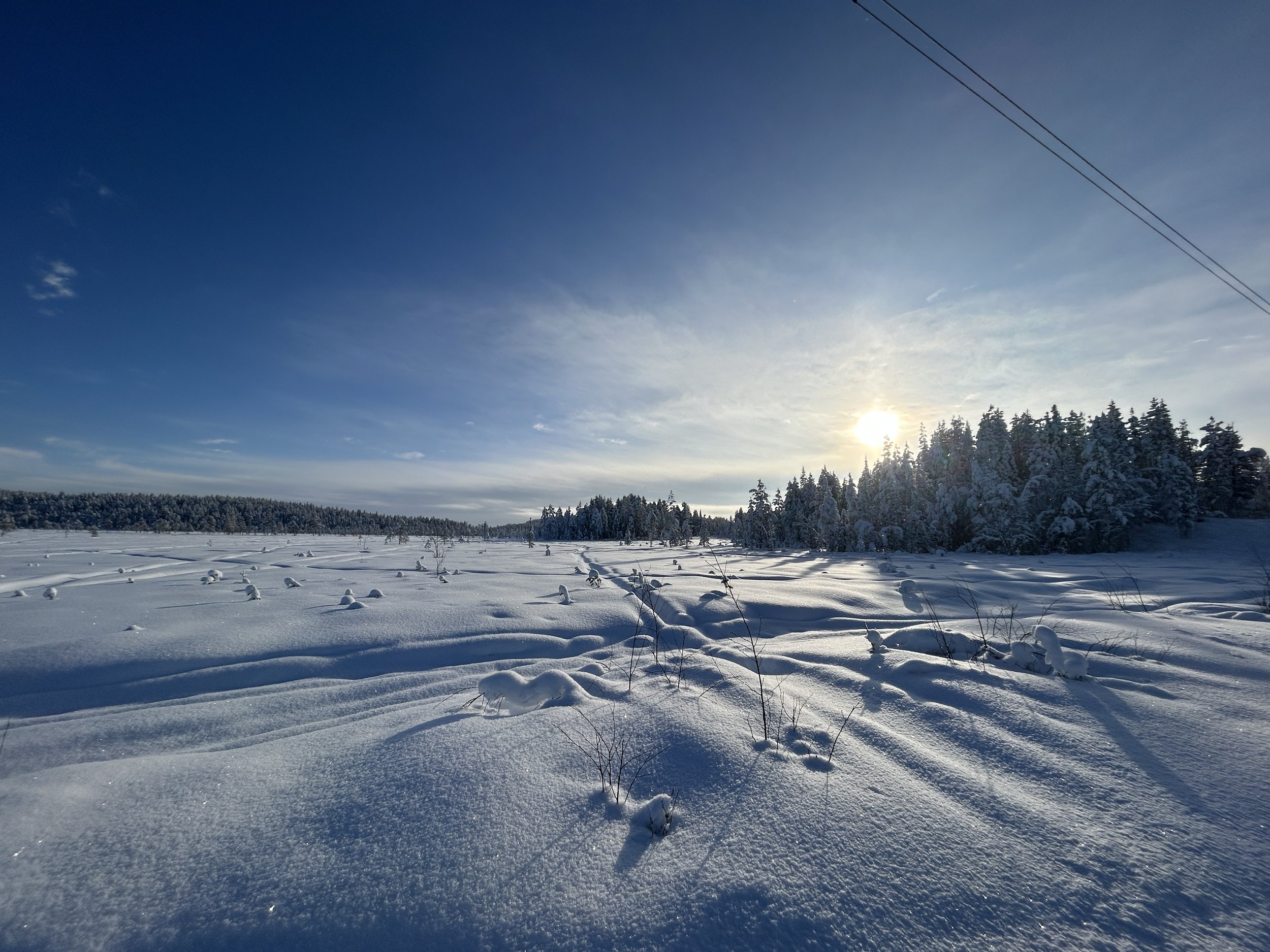
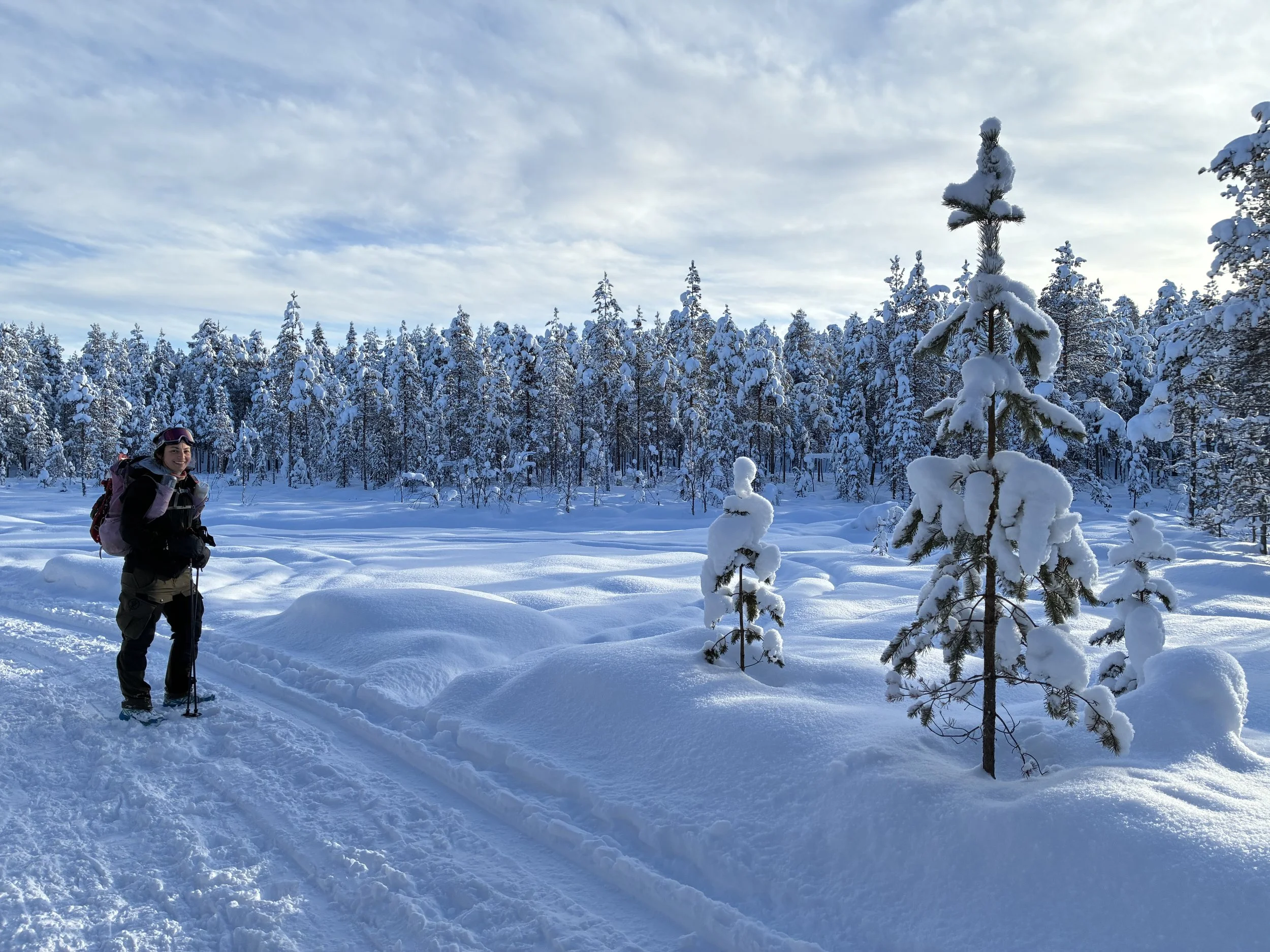
The first 10km followed a road and we were treated to a beautifully colourful sunrise. After the freezing cold of the night before I had layered up heavily, worried about frostbite and hypothermia — both of which I’m fairly certain I had come dangerously close to experiencing in the teepee. I moved quickly through the first checkpoint and onto our first frozen lake. It was a real ‘pinch-me’ moment. The lake stretched endlessly ahead, vast and silent, and the landscape felt almost surreal in its beauty.
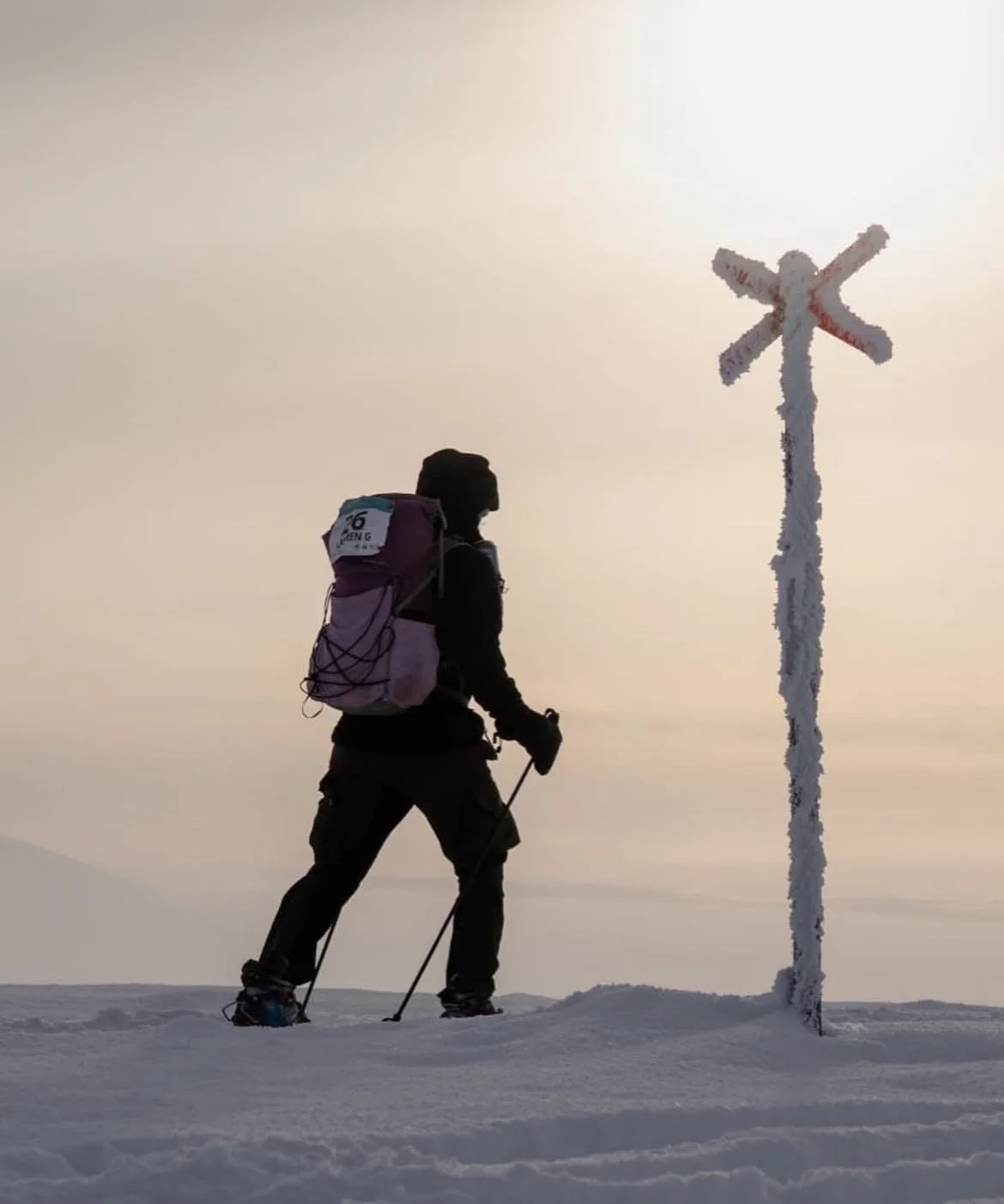
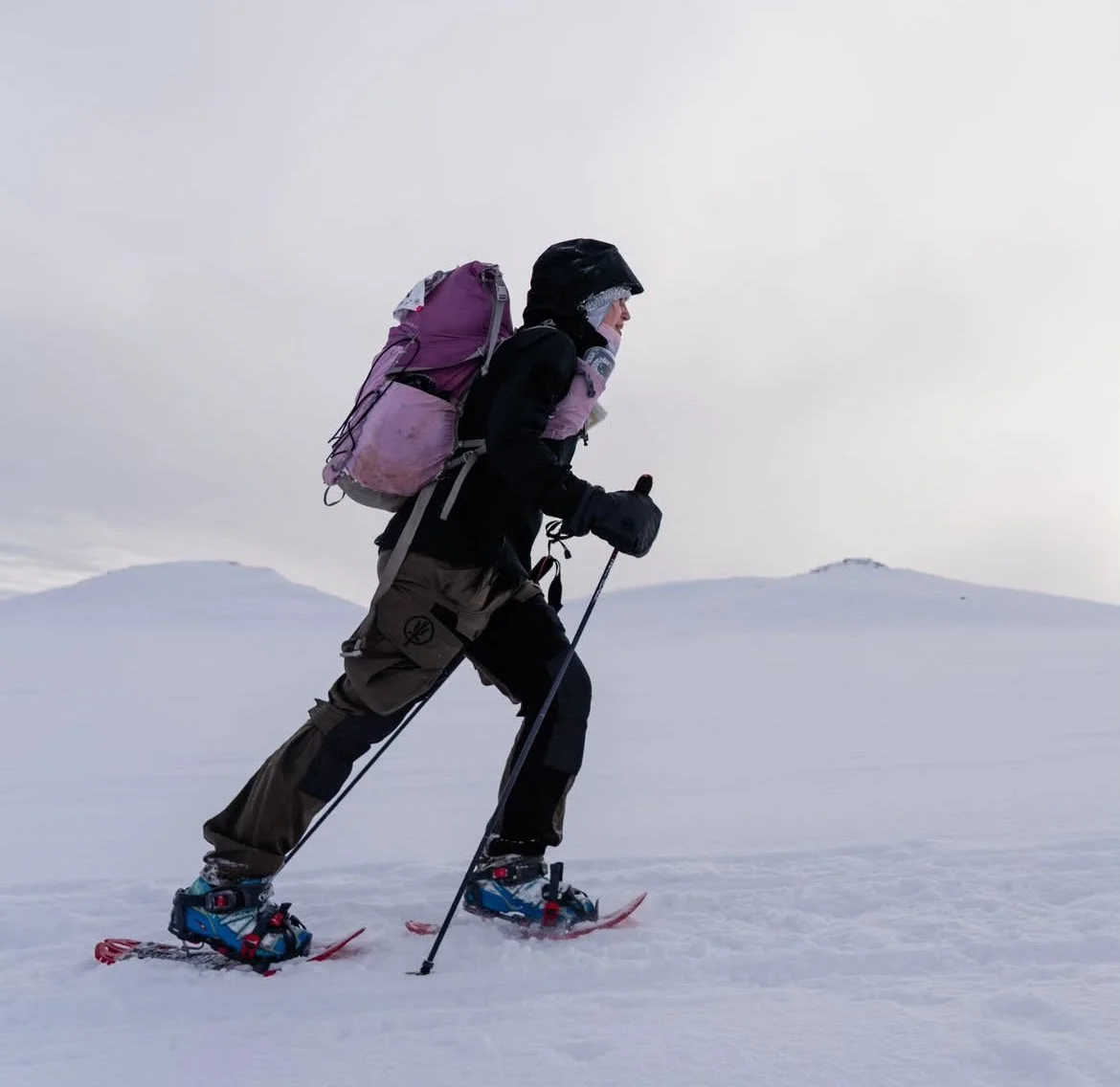
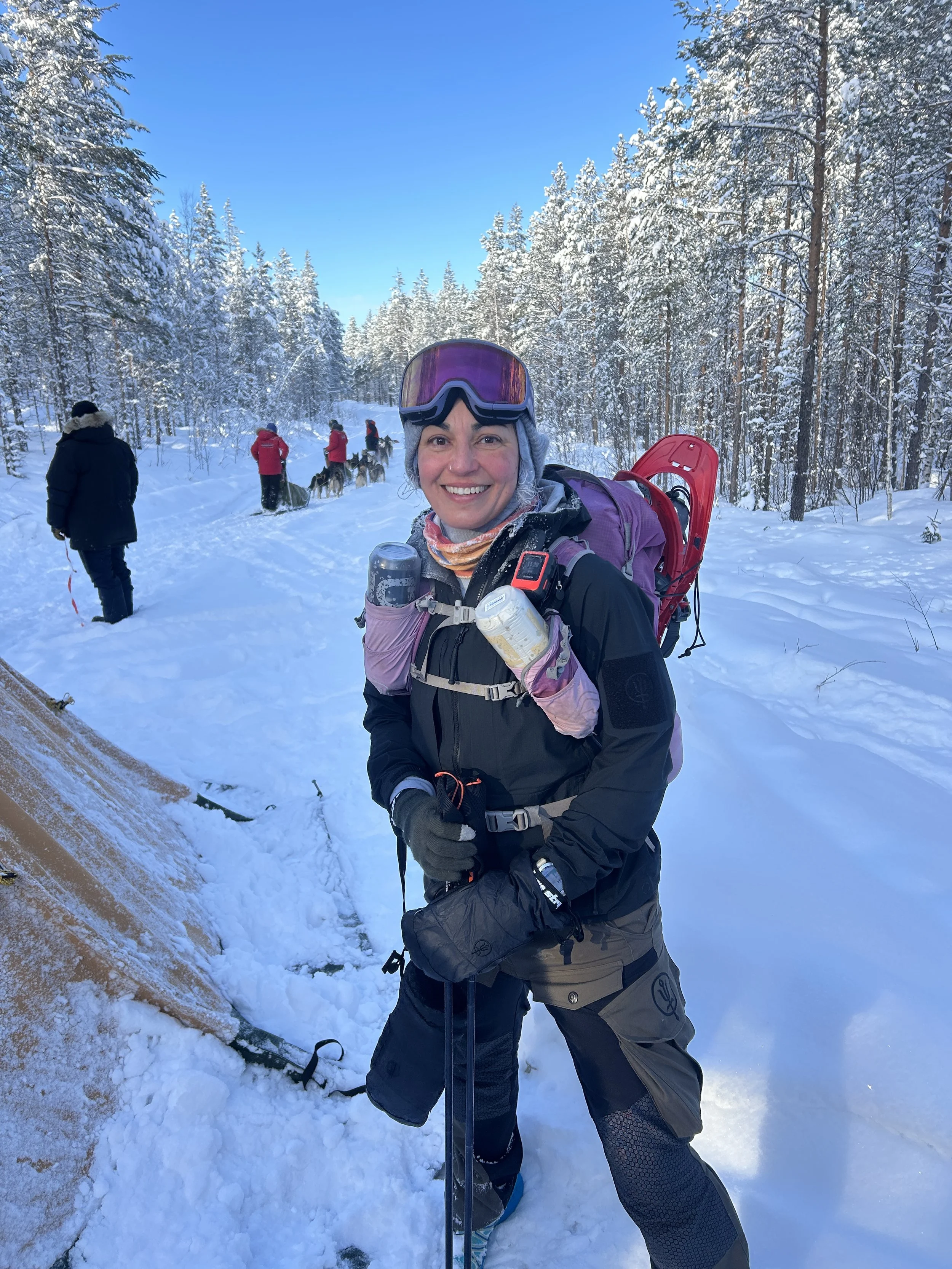
After the next checkpoint we began ascending a long hill which seemed to go on forever. Spirits were still high and I kept turning around as we climbed higher, the views becoming more impressive with every step. Many runners had already switched into their snow shoes by this point, but I resisted for as long as possible as the snow didn’t initially seem too deep. That changed fairly quickly. As I approached the next checkpoint I began regularly losing my footing, sinking knee-deep into snow, so I finally gave in and put them on.
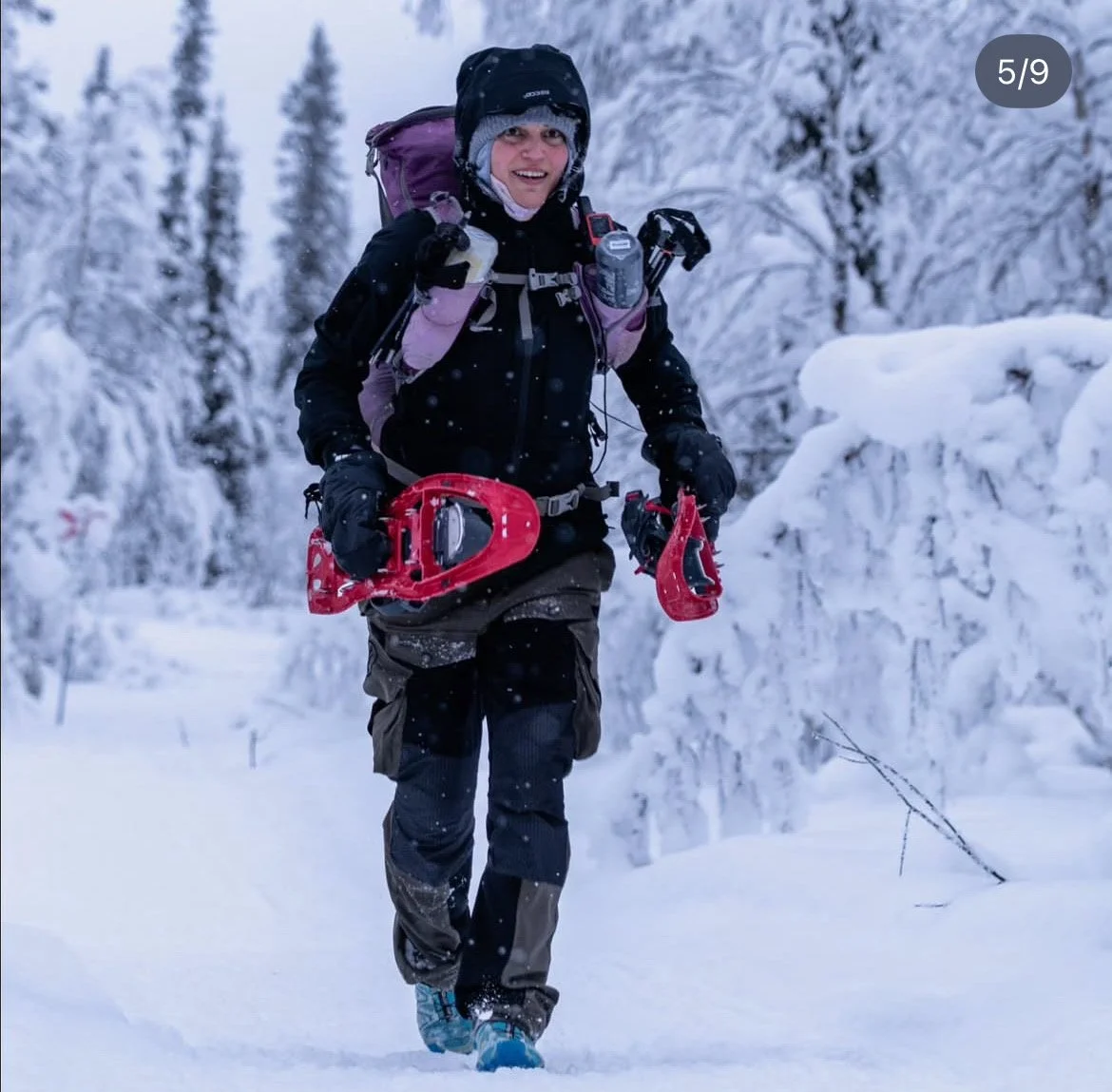
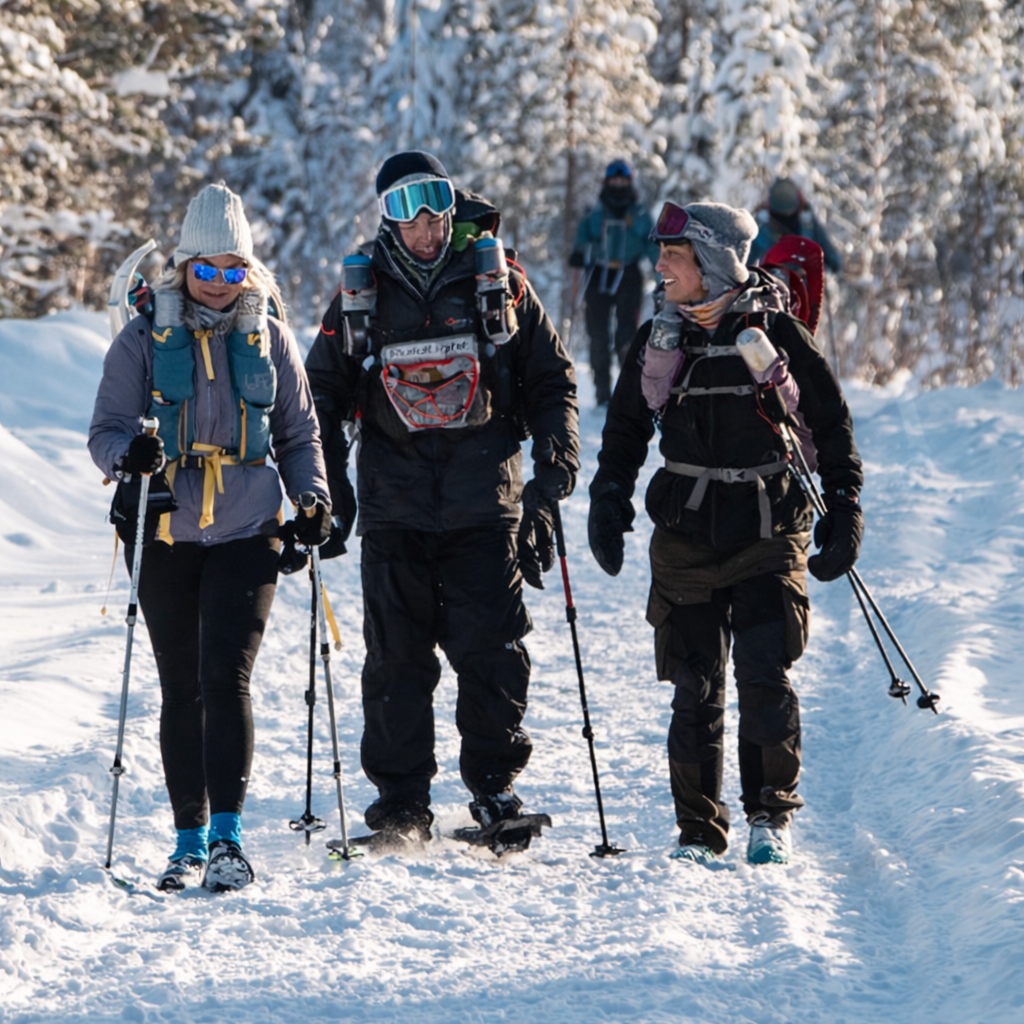
I never really made friends with the snow shoes. They were heavy and clunky, making running feel awkward and cumbersome, yet moving without them was equally exhausting as the snow was so deep in places. The day continued with a steady rhythm of moving forward and taking in my new surroundings. It was breathtakingly beautiful, if not a little monochrome.
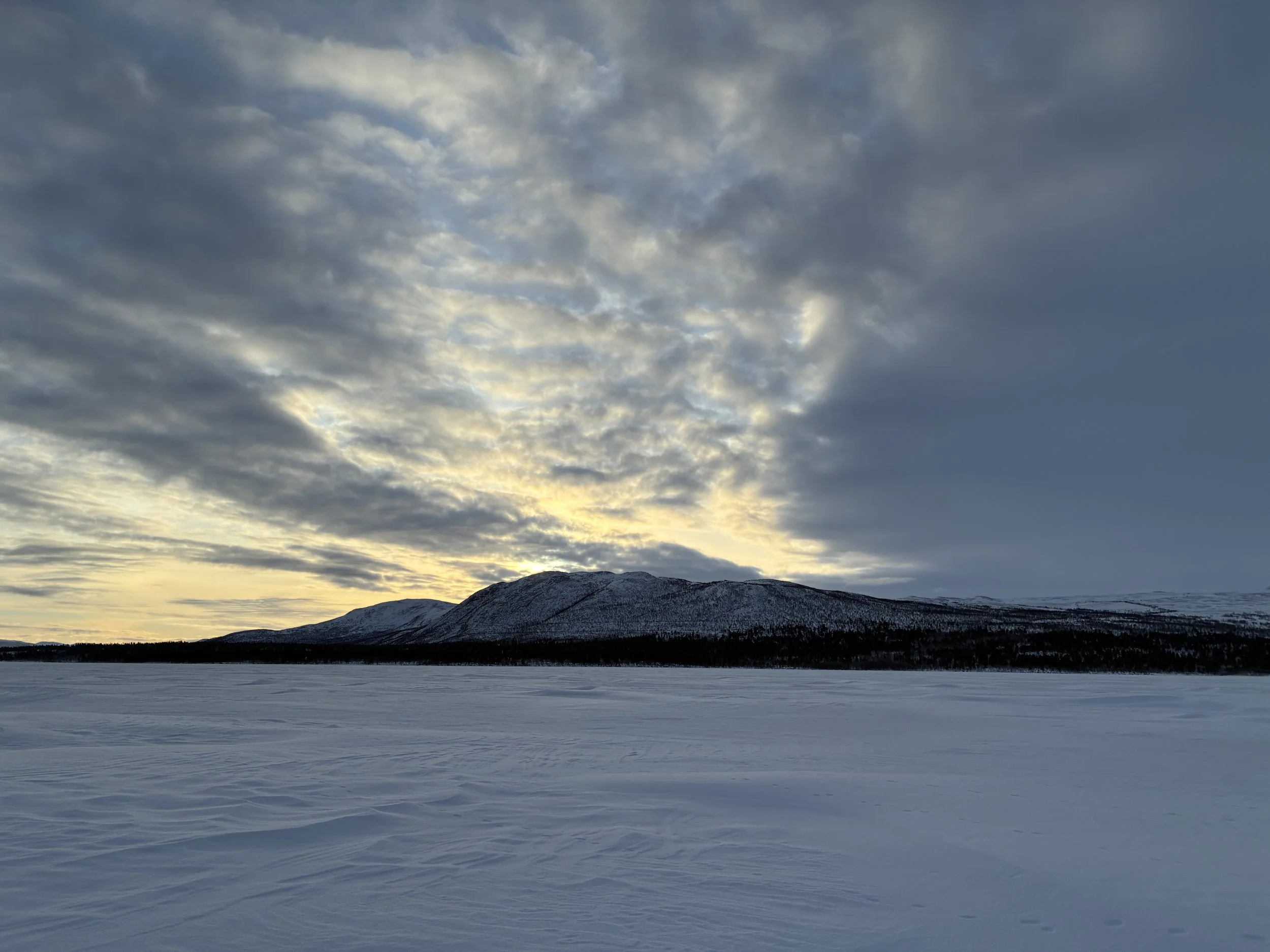
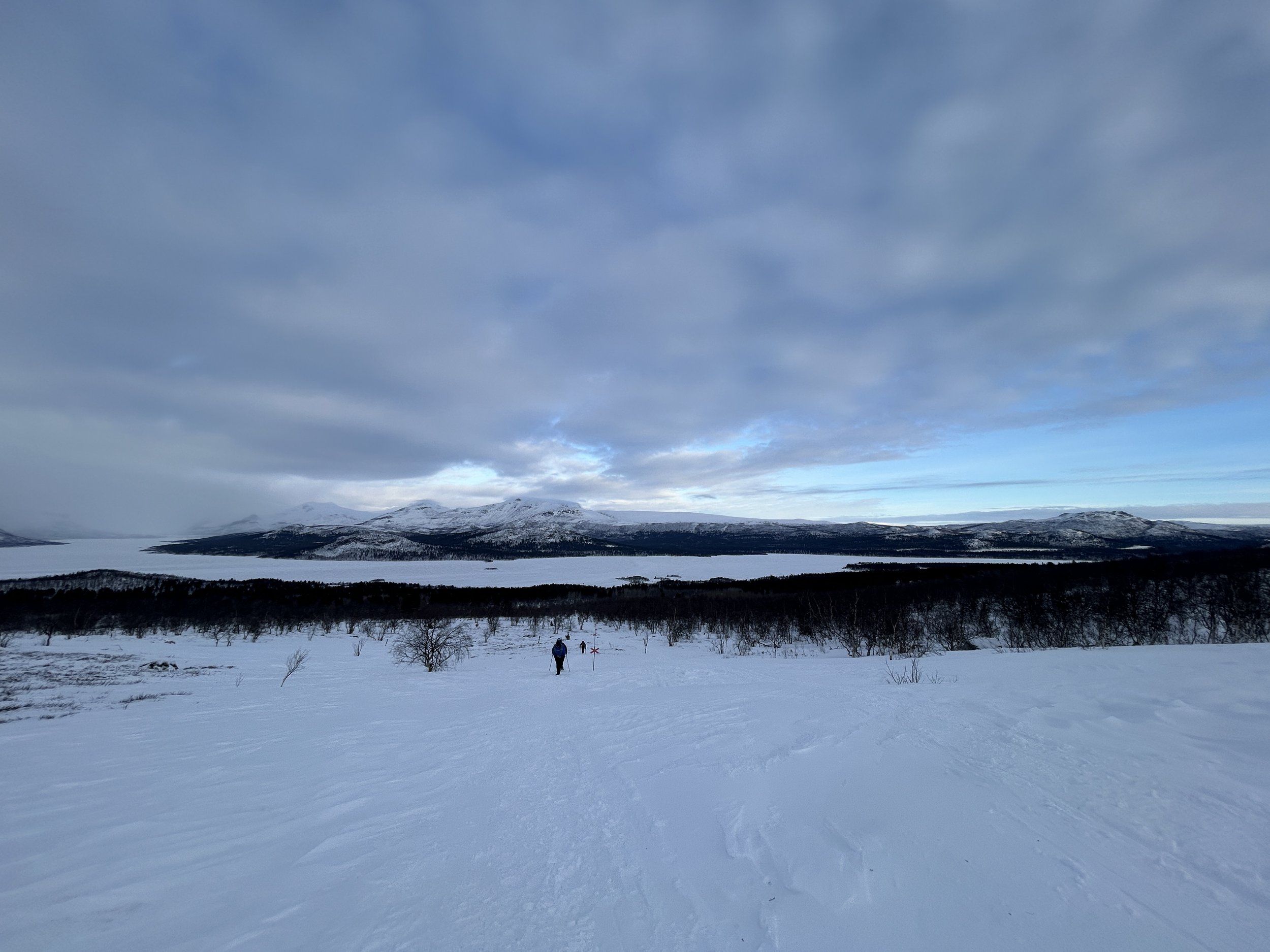
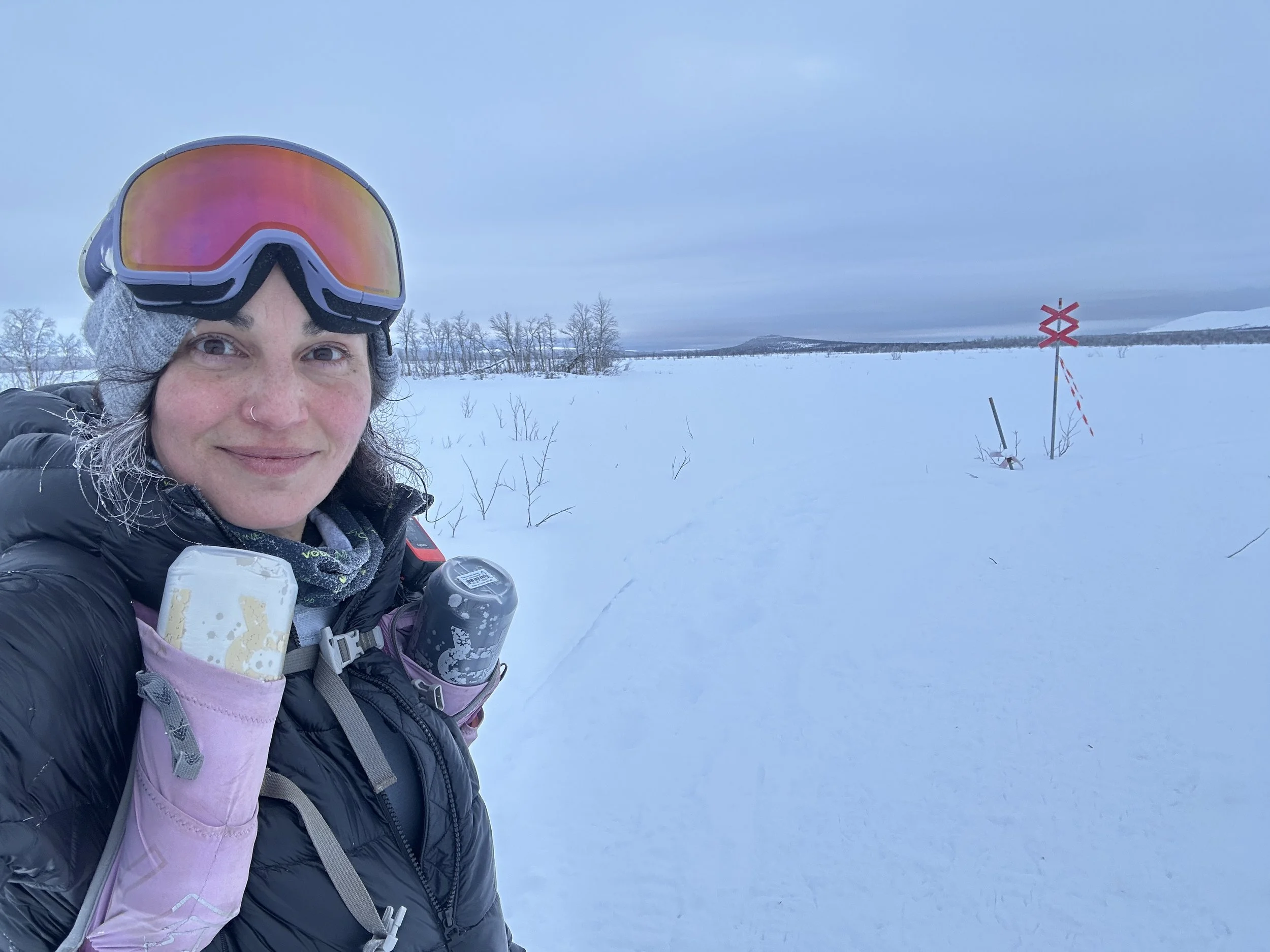
By now I had sweated through several layers, but as the sun began to set the temperature dropped quickly in the shadows of the hills. I didn’t want to remove any clothing for fear of getting too cold. That decision would later nearly cost me my race.
At one point I found myself completely alone on an ice lake. The field of runners had spread out so much that I couldn’t see anyone behind me, and far in the distance ahead I could just make out three tiny dots — my friend Simon and his two friends, Dave and Stef.
Eventually I reached the final checkpoint just as Stef was leaving. He was struggling with his knee and had told the others to go ahead, so we decided to tackle the final stretch together. By now it was almost dark and a low cloud had settled over the landscape, making the air feel damp and heavy. It didn’t take long before my down jacket became soaked from the outside, meeting the already wet layers underneath from my sweat. Within a short space of time I was completely wet through, and with the temperature sitting around −18°C I knew I was in trouble.
My options were simple: turn back to the last checkpoint and DNF my race on day one, or keep moving quickly in the hope that I could stay warm enough to reach the finish.
The final kilometres felt like they were never going to end — a feeling that would become quite familiar as the week went on. Eventually we arrived at our bunkhouse for the night where we could dry our clothes and hopefully get some rest. After zero sleep in the freezing teepee the night before, followed by nearly eleven hours on the course, I could barely keep myself upright. This was only stage one and I was already completely exhausted.
The Arctic had nearly ended my race before it had properly begun.
Stage 2 – Mount Kabla
43km | 1358m | 10hrs 43mins
After a solid night’s sleep we were up and getting prepped at 5:30am. This became our routine every morning, apart from the long day when we started an hour earlier. Almost the total elevation for the entire race sits within the first two days, and we’d been told that once we had made it through these stages, our chances of completing the whole week increased significantly.
Stage 2 would take us over Mount Kabla. I was excited for this stage as I love mountains and rarely begrudge the long grind to the summit when it’s rewarded with incredible views. Although, given the conditions underfoot, I had a feeling I might feel slightly differently this time.
We started the day in snow shoes, which immediately dulled my enthusiasm, but needs must. The first 10km was a mix of snowy forest trails and frozen lakes. At the earliest opportunity I ditched the snow shoes and made good progress on foot. Despite the previous day’s effort I felt surprisingly good after a decent night’s sleep. I had also adjusted my layering which felt much more comfortable, meaning I would sweat less and still had spare layers in reserve in case the temperature dropped.
It was a beautiful day. The sun shone through the trees and the snow sparkled in the sun’s rays, making the whole landscape feel almost magical. Eventually, however, I had to admit defeat and put the snow shoes back on after sinking knee-deep into the snow several times. This time I didn’t mind them quite so much as I wasn’t planning on running up Kabla anyway. The snow shoes also had a mechanism that allowed you to raise your heel slightly within the binding, which helped reduce the strain on the calves during long climbs.
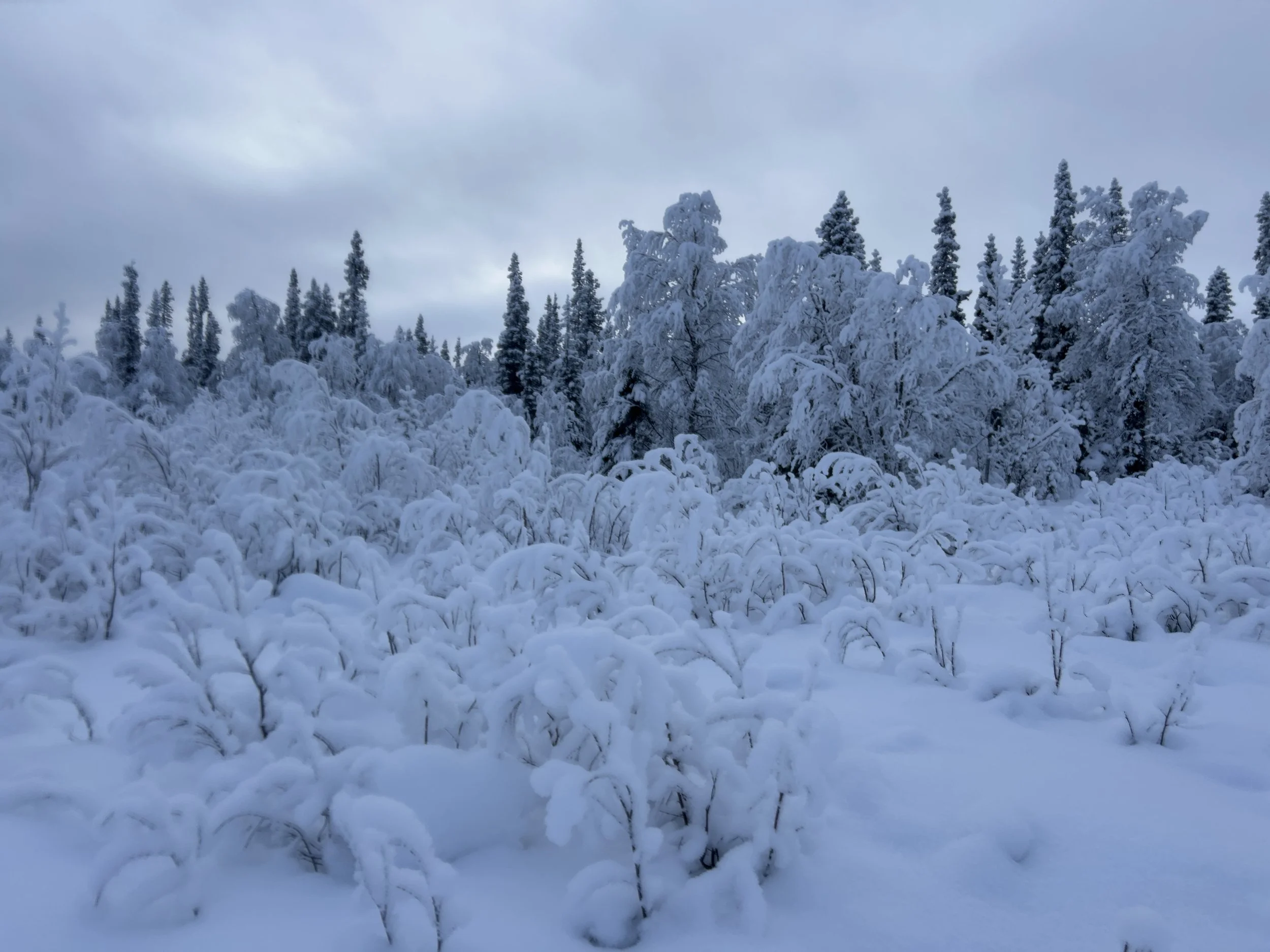
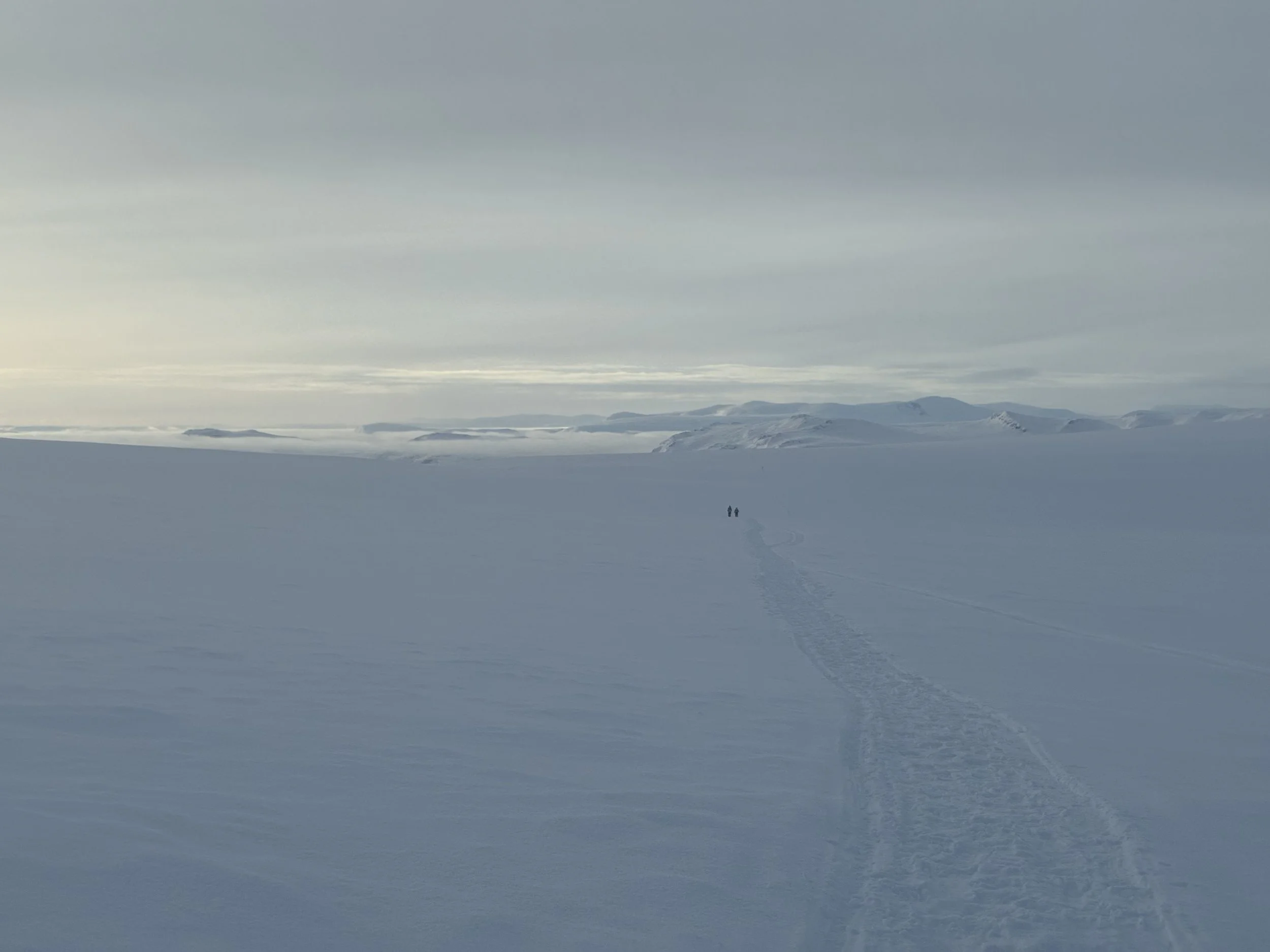
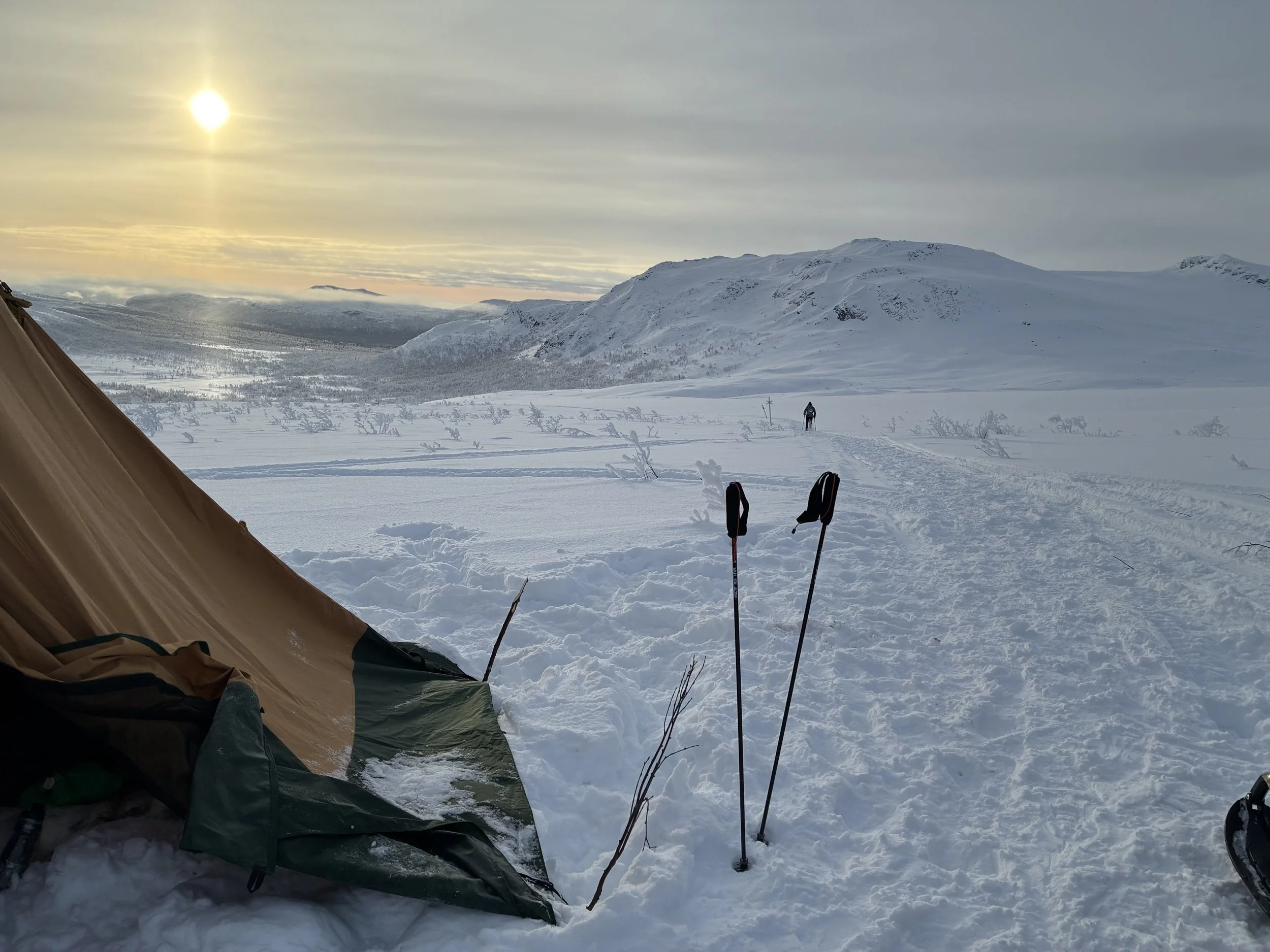
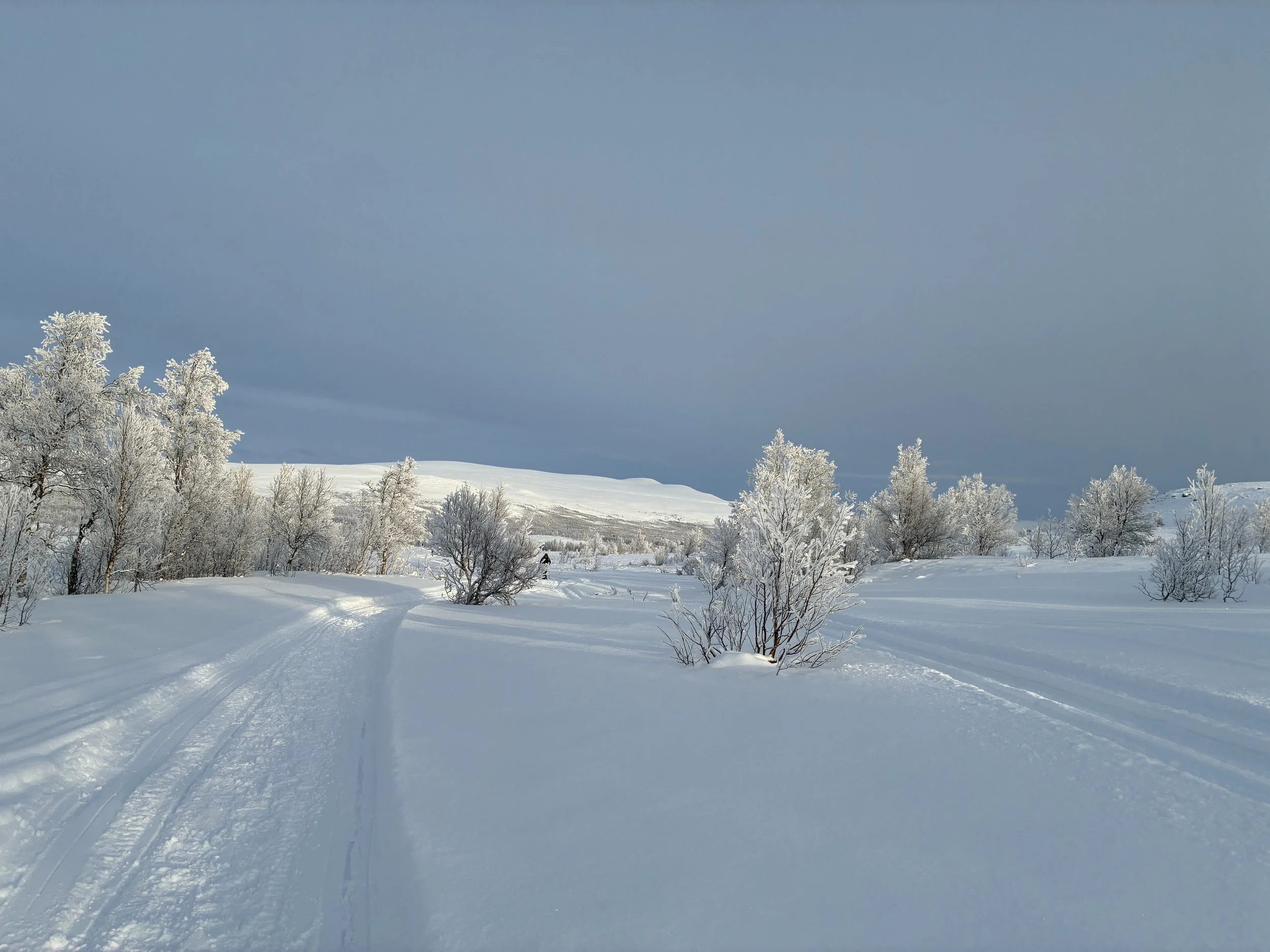
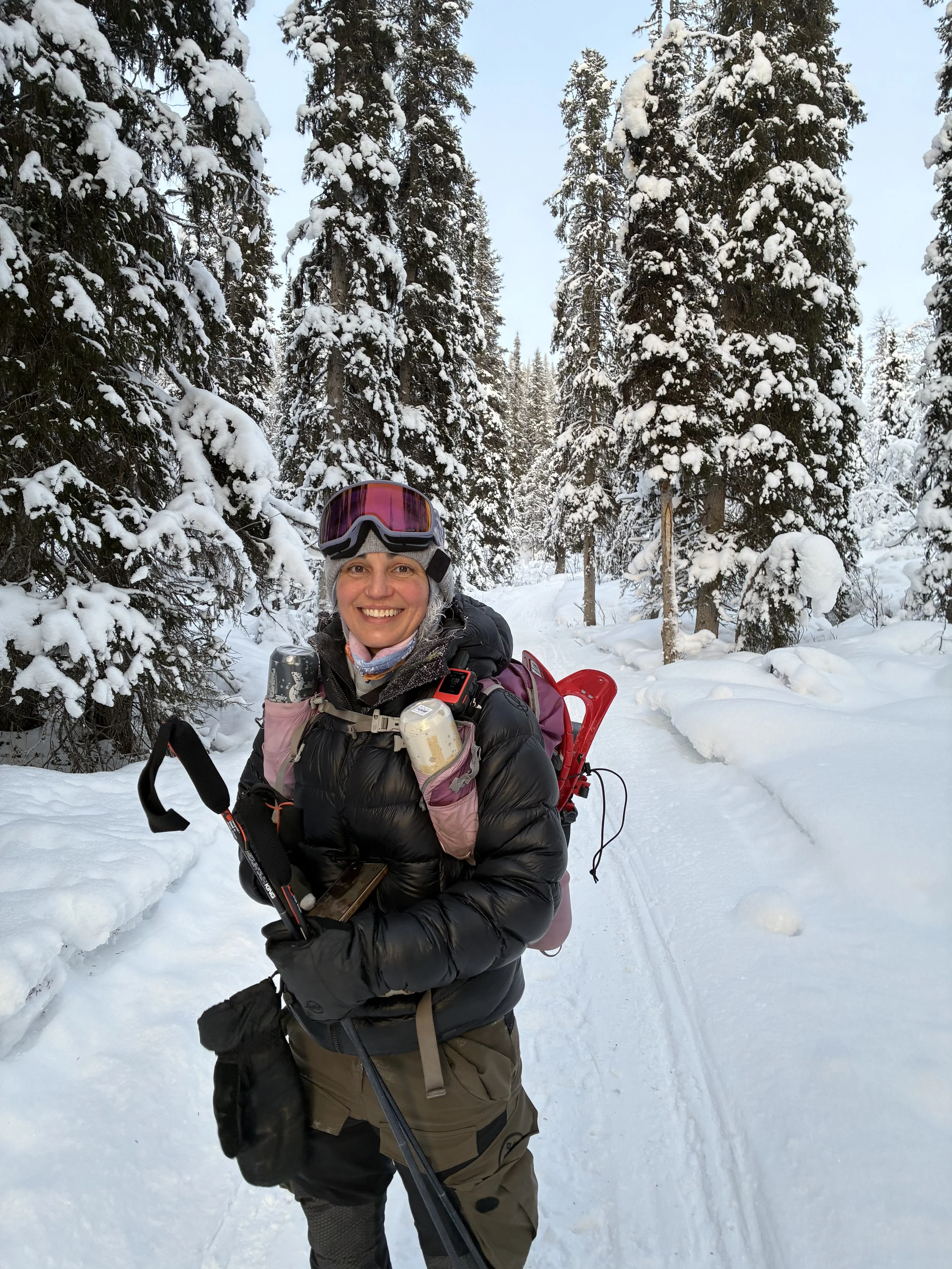
As we ascended higher we eventually climbed above the cloud line, and I found myself repeatedly turning around to take in the view. At times it felt as though we were walking through the sky. There were so many moments during this race where I simply had to stop and look around. I still couldn’t quite believe that we were actually racing in the Arctic Circle.
Once we reached the summit I removed the snow shoes and attempted to run down the mountain. That idea lasted all of about thirty seconds before I realised the snow was far too deep and I kept falling over, so back on they went. To make matters worse it turned out not to be the true summit, and we soon found ourselves climbing again.
By this point I was hungry and increasingly frustrated with all of the walking. I just wanted to run. To add to my sinking mood, one of my water bottles had frozen.
Eventually the next checkpoint came into view and I decided to take a little extra time there to pull myself together. I needed food, a hot drink and a short rest. My dear friend Rose arrived not long after me, and we decided to tackle the remaining 15km together.
Rose and I first met at the Highland Ultra in 2023 and again at the Desert Ultra in Namibia in 2024, where we spent much of the race running together. In August last year we also ran the entire Shakespeare’s Avon Way — 97 miles — as a personal challenge. We know each other very well and work well together on the trails, naturally taking turns to set the pace. When one of us is feeling low, the other holds things together. We just work.
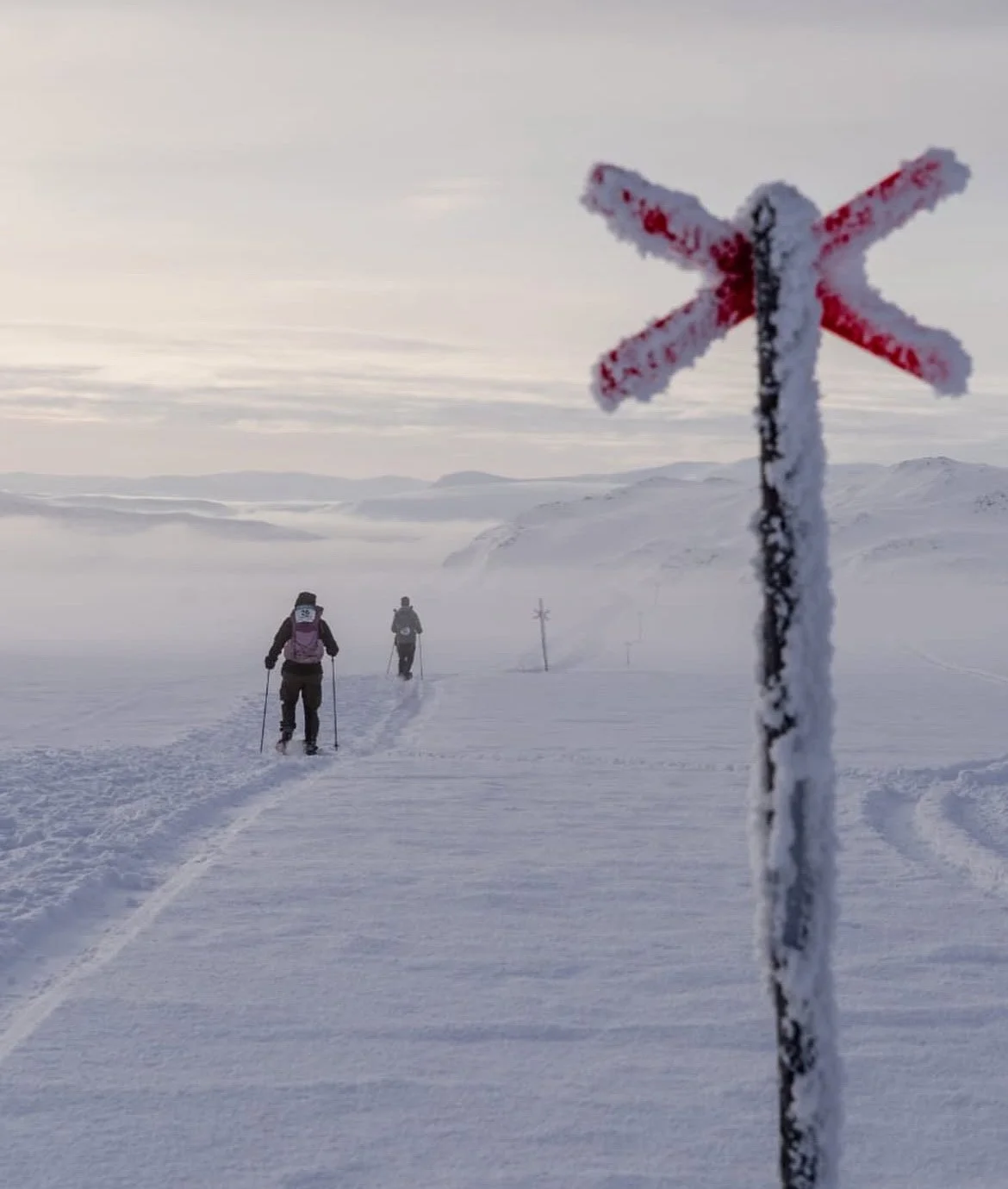
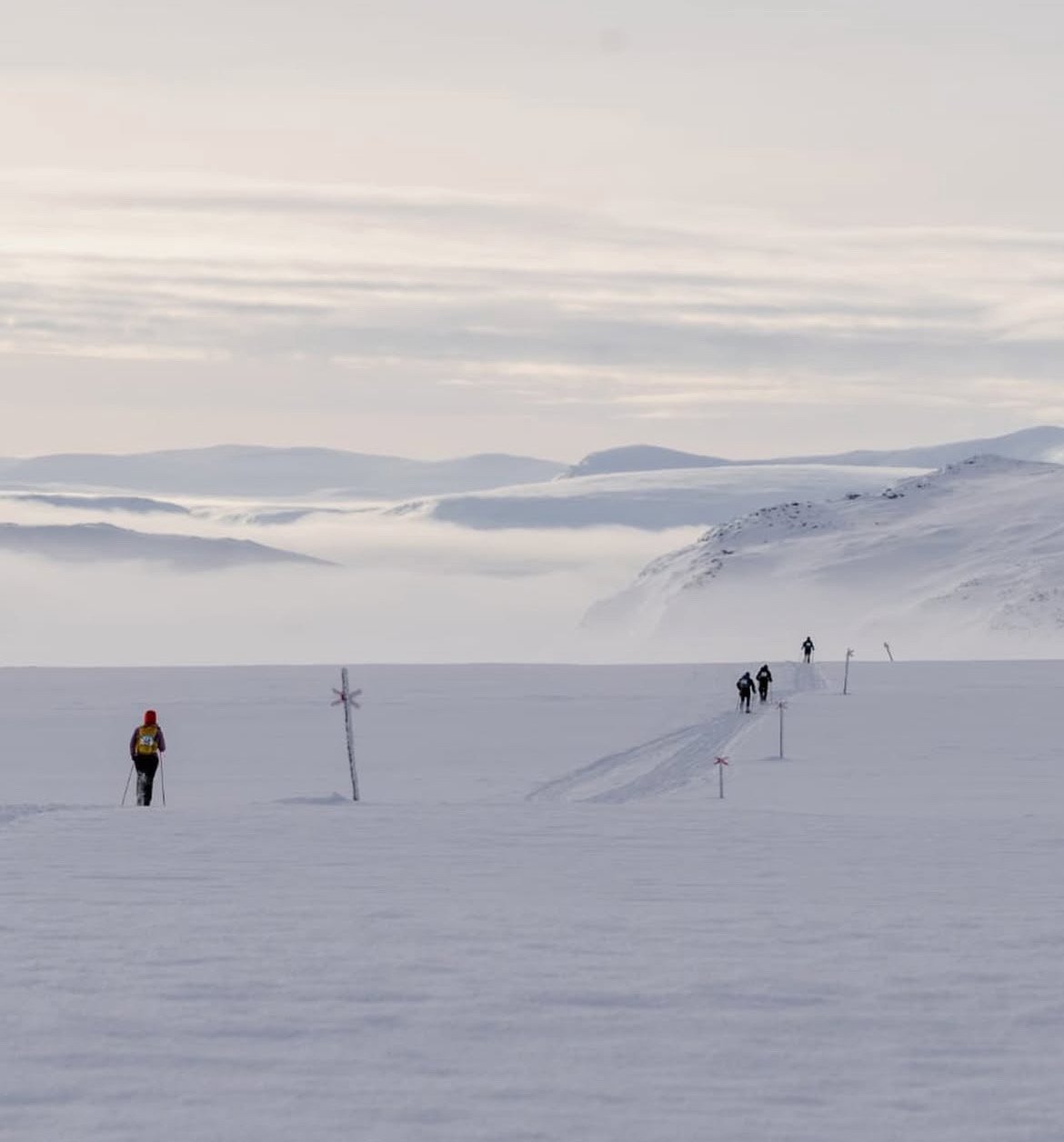
Coming into this race I had hoped to compete. My training had gone well and I felt strong, and I’d put a lot of thought into my kit and preparation. What I hadn’t anticipated was just how much hiking there would be. While I can move well when running, my hiking pace is not one of my strengths.
By this point I had made peace with the fact that this race was no longer about performance or podium positions. I had to park my ego and accept that I was now firmly in survival mode, where mistakes could carry serious consequences. My only goal was to complete the race, and I knew that my chances of doing so were significantly higher with Rose by my side. I’m fairly sure she felt much the same way.
At one point I had to give myself a serious talking-to. I’d lost my head and found myself becoming increasingly frustrated with the snow shoes and the slow pace. Being there was a privilege, and I was behaving like a bit of a brat. All I had to do was look around to remind myself of how extraordinarily majestic this place was. With that in mind I pulled my big-girl pants up and carried on.
Ditching the snow shoes again certainly helped my mood.
Once again it was dark by the time we finished and another eleven-hour day was done. Our accommodation for the night was a four-person cabin which felt wonderfully warm. The previous night we’d had to keep a fire going between us just to stay warm, whereas this place had radiators which felt like a real luxury.
None of the places we stayed had running water or toilets though. If you needed to go in the middle of the night it meant a 20–30 metre walk to the toilet block in minus twenty degrees, so unsurprisingly there was quite a lot of squatting behind huts throughout the week.
Stage 3 – The Ice Lakes
42km | 766m | 8hrs 37mins
By this point I had started to adapt to the harsh environment and had finally figured out my race admin, particularly when it came to layering. I had also made peace with the idea that this race was now about completing rather than competing, which took a huge amount of pressure off. Once I accepted that, I was able to start properly enjoying what was proving to be an extraordinary experience. We had also successfully made it through the first two stages, which statistically meant we now had a very good chance of completing the entire race.
With the long stage looming the following day, I set myself one clear goal for Stage 3: to finish by 5pm in order to maximise recovery time and be as prepared as possible for what was coming next.
I started the day without my snow shoes. It seemed to be roughly a 50:50 split across the group, although I couldn’t help but envy those who appeared to get on well with them.
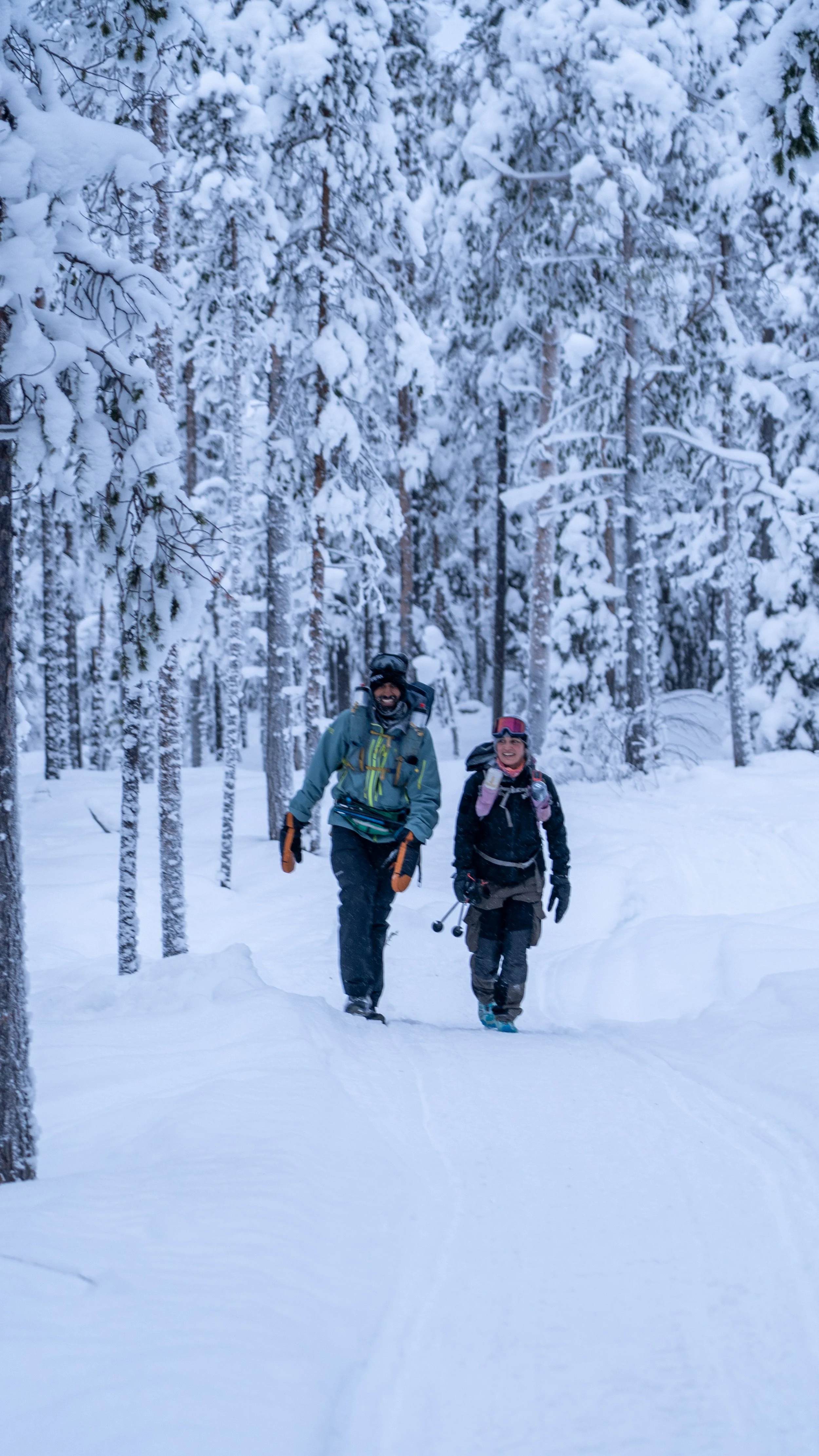
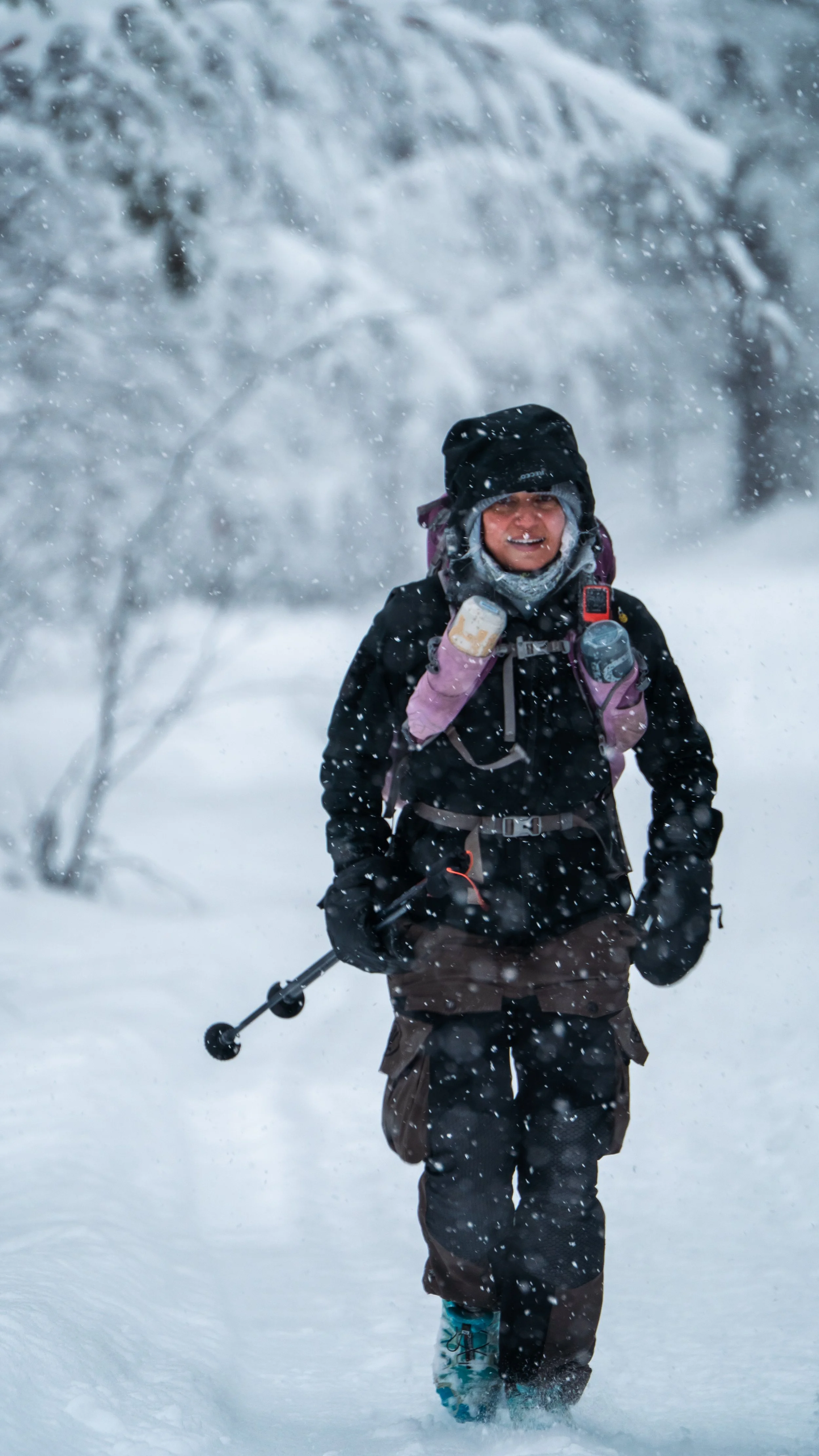
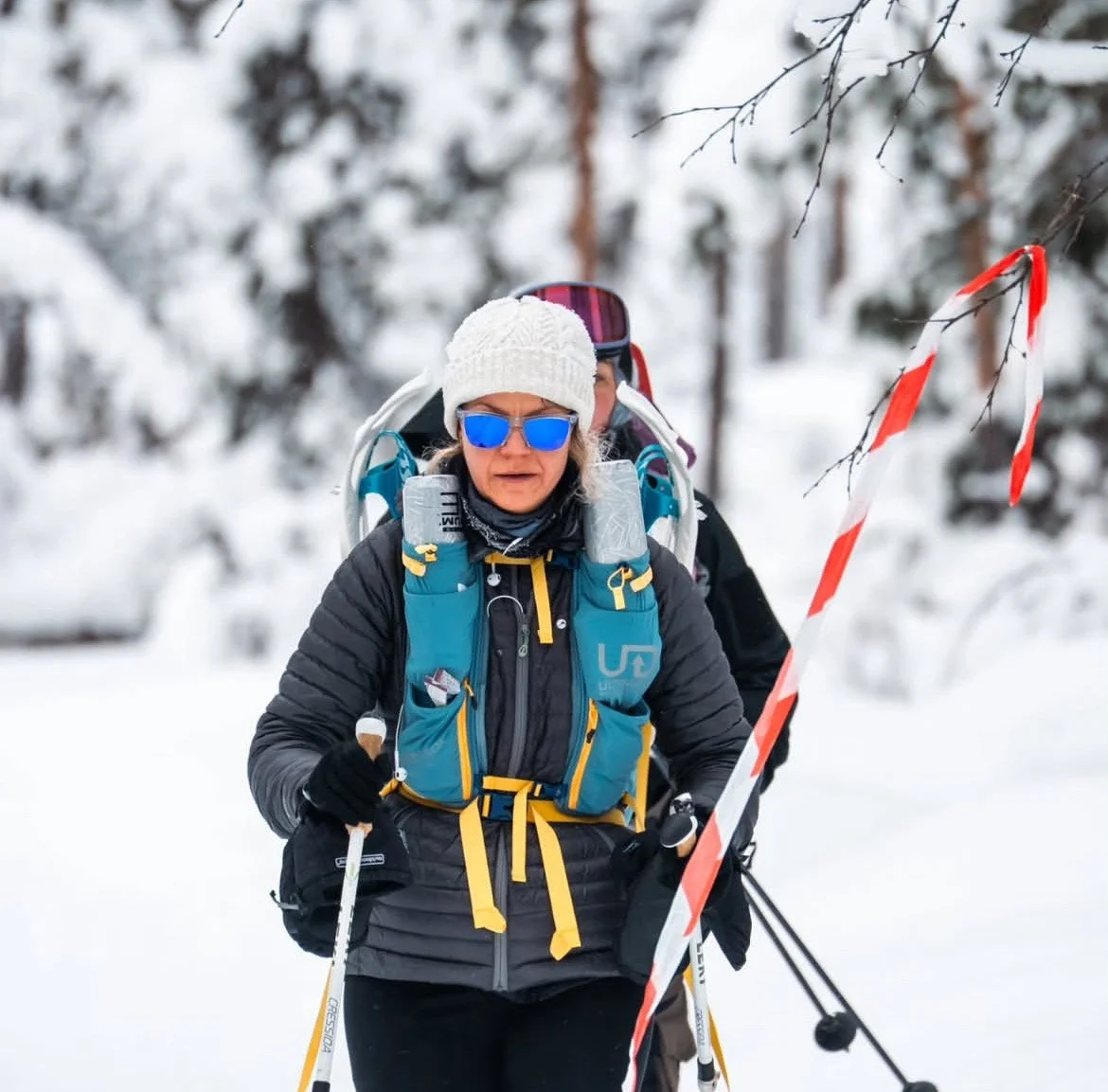
Although this stage was another marathon distance, we had already tackled the majority of the race’s elevation during the first two days, so I was hopeful that we might finish a little earlier. The first 21km was a lovely mix of frozen lakes and snowy forest trails, which had quickly become my favourite terrain to run on.
Rose and I ran most of the stage together, but as I was feeling strong and the terrain was mostly runnable, I moved ahead slightly and waited for her at the first checkpoint. With my 5pm goal firmly in mind I felt focused and motivated.
By this point, however, my ankles were starting to cause me some trouble. The pain had reached the stage where regular paracetamol was no longer quite cutting it, so I asked one of the medics for some codeine. I don’t usually get on particularly well with it as it tends to make me feel dizzy and nauseous, but the pain was becoming increasingly difficult to manage and I needed something to take the edge off.
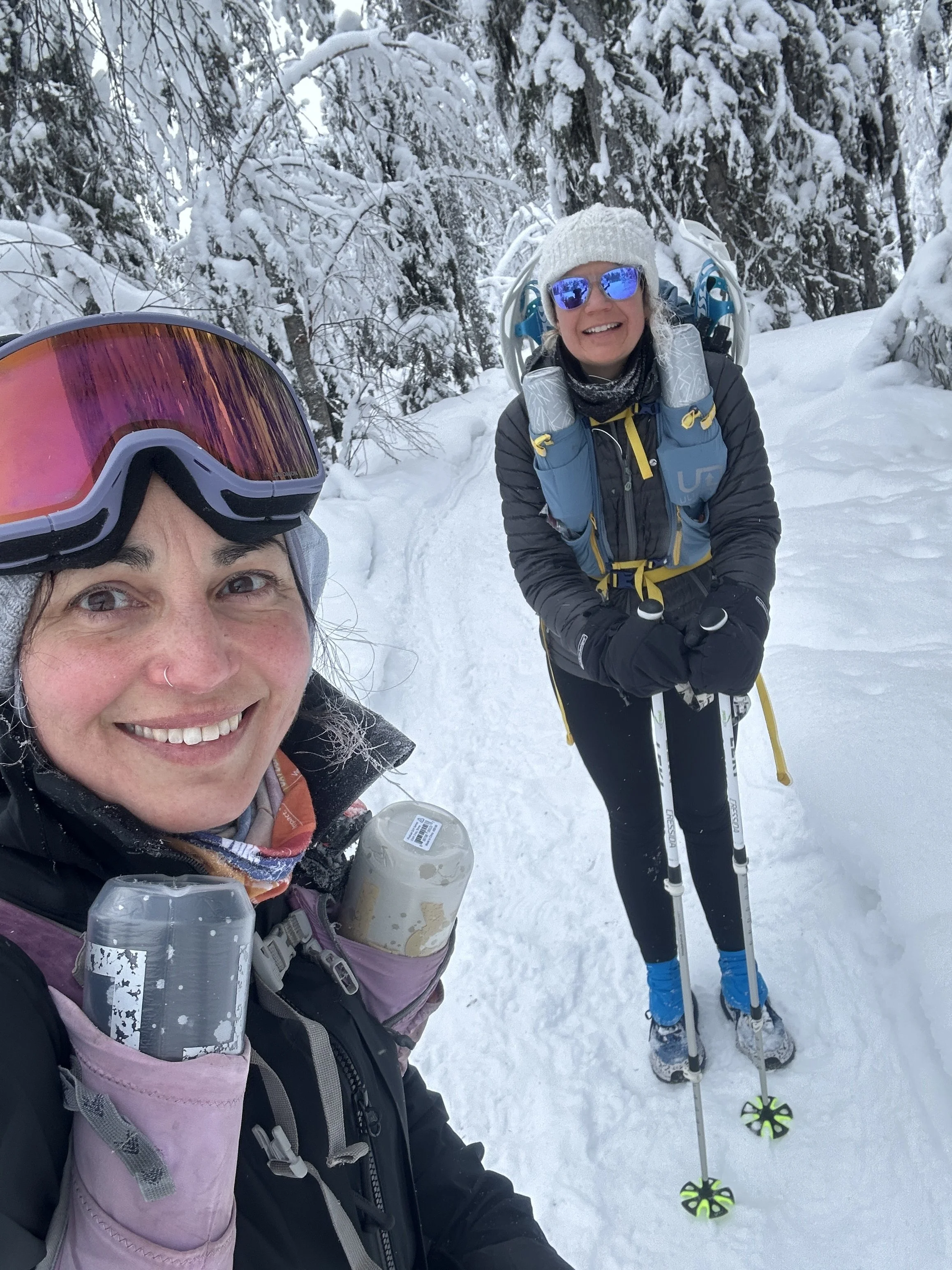
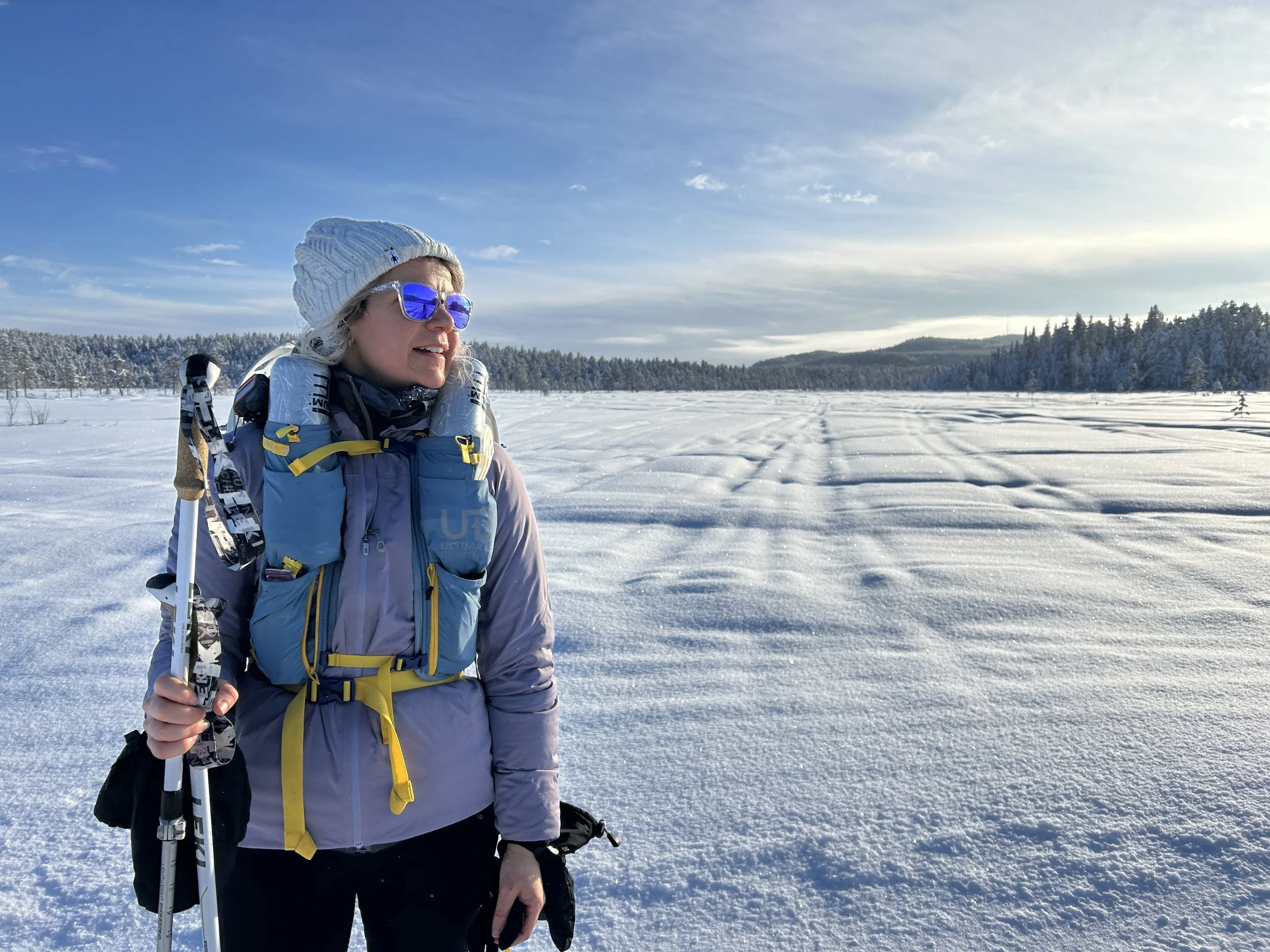
The second half of the stage was entirely across frozen lakes, which were completely flat — as flat as a frozen pancake. By now Rose was starting to struggle physically with her knee, and it was beginning to affect her mentally as well. I was still feeling strong and confident that we could achieve our 5pm target.
Rose suggested that I should go ahead and that she would see me at the stage finish. That wasn’t an option. We were doing this together.
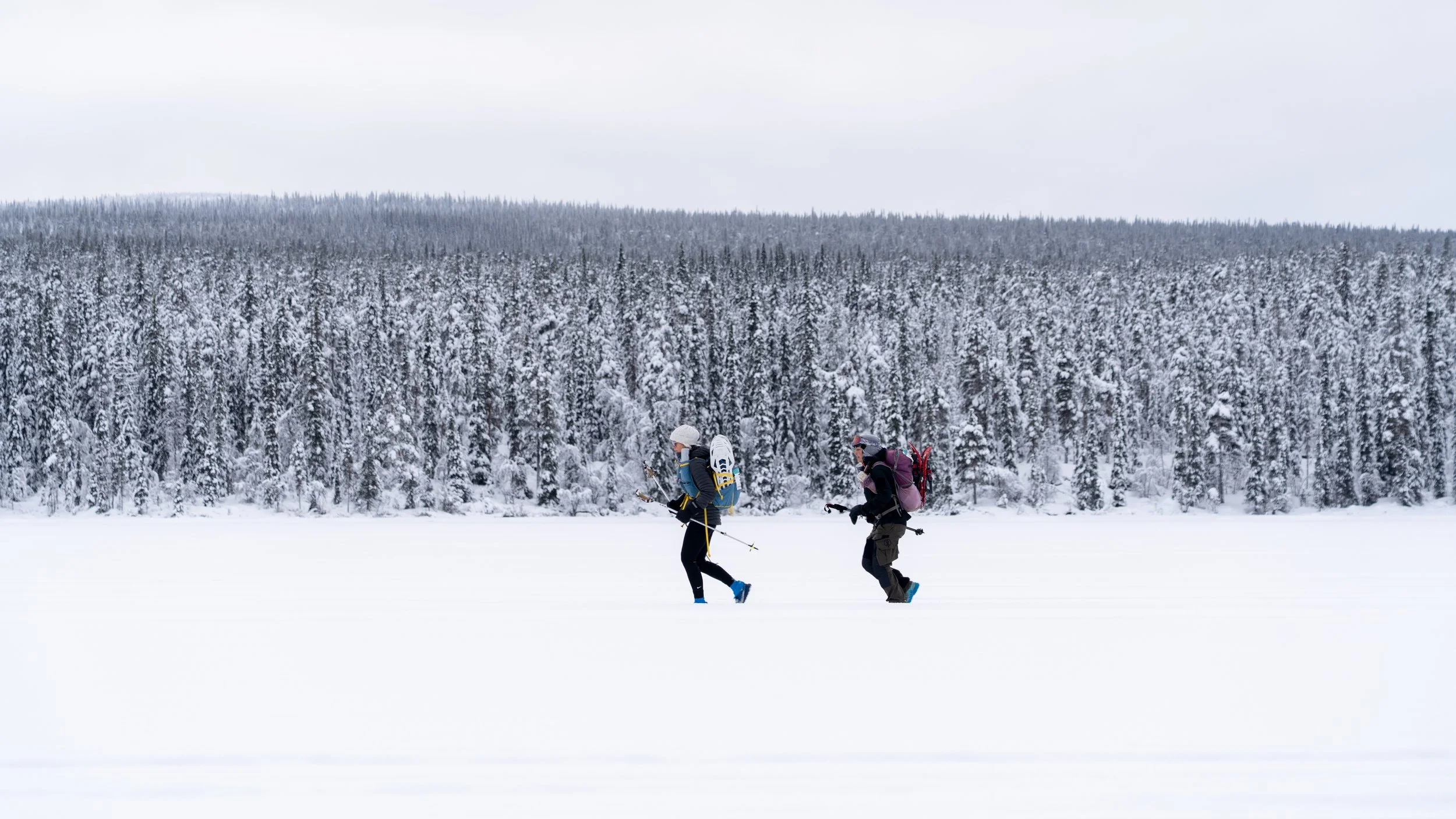
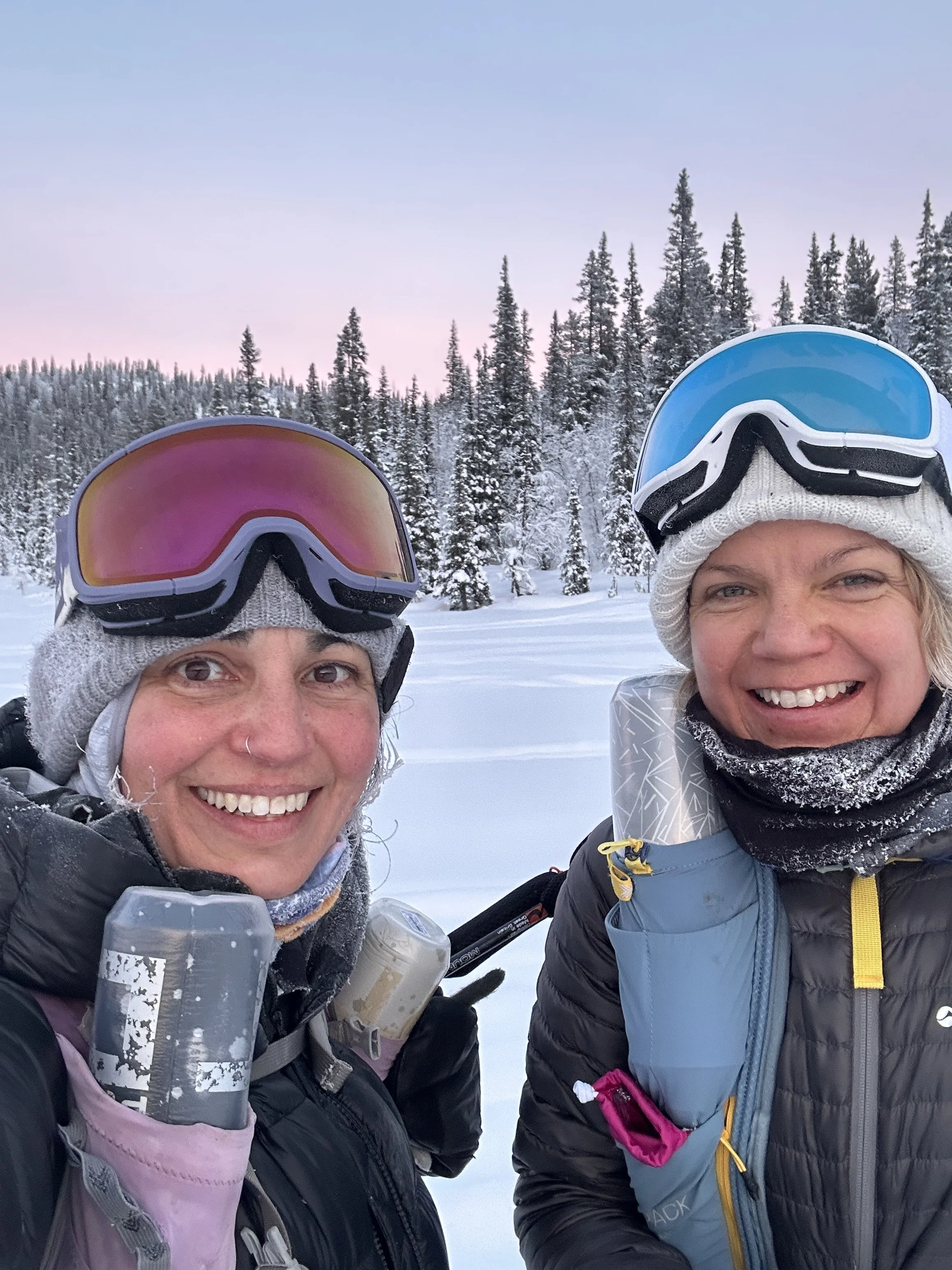
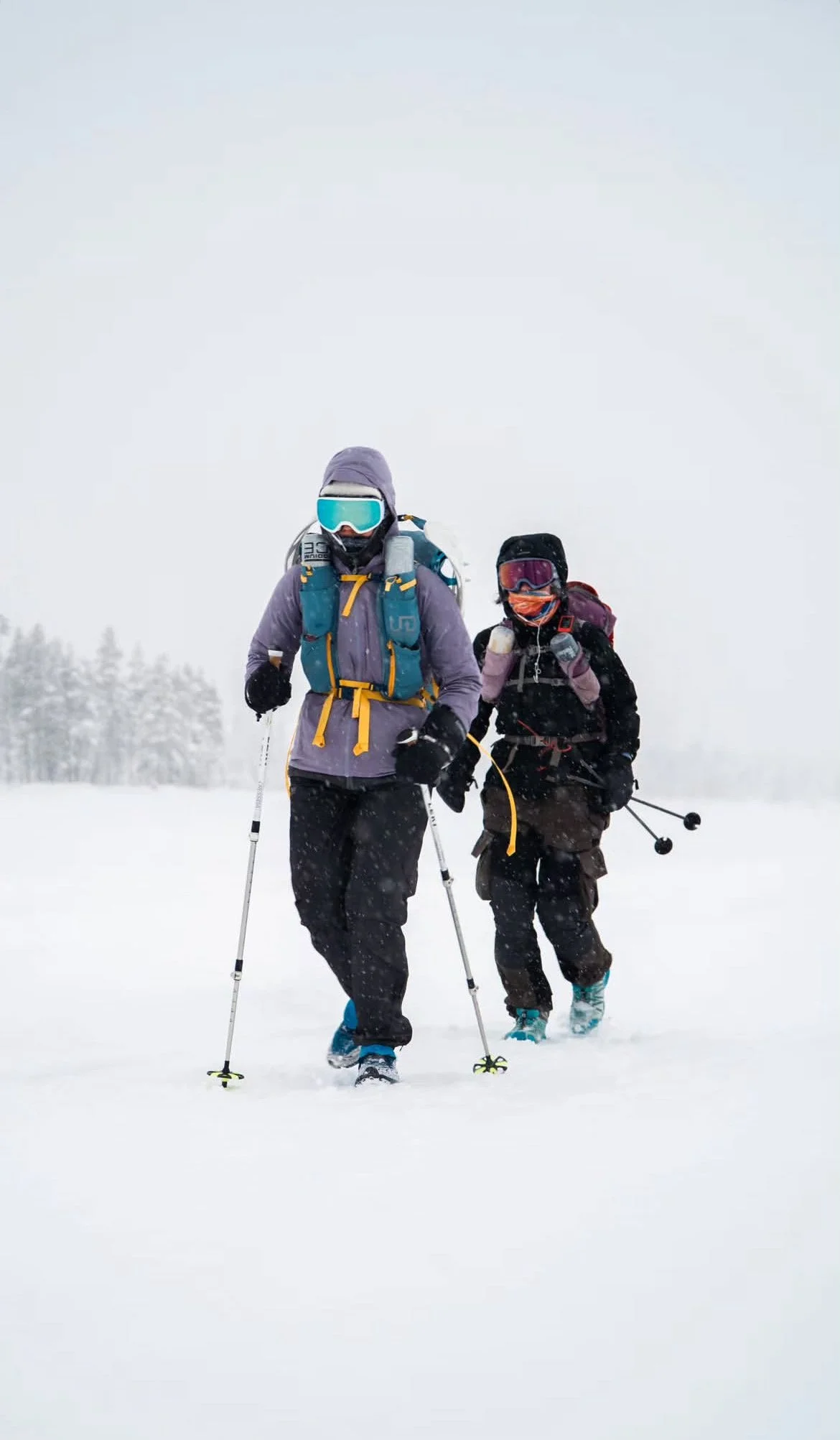
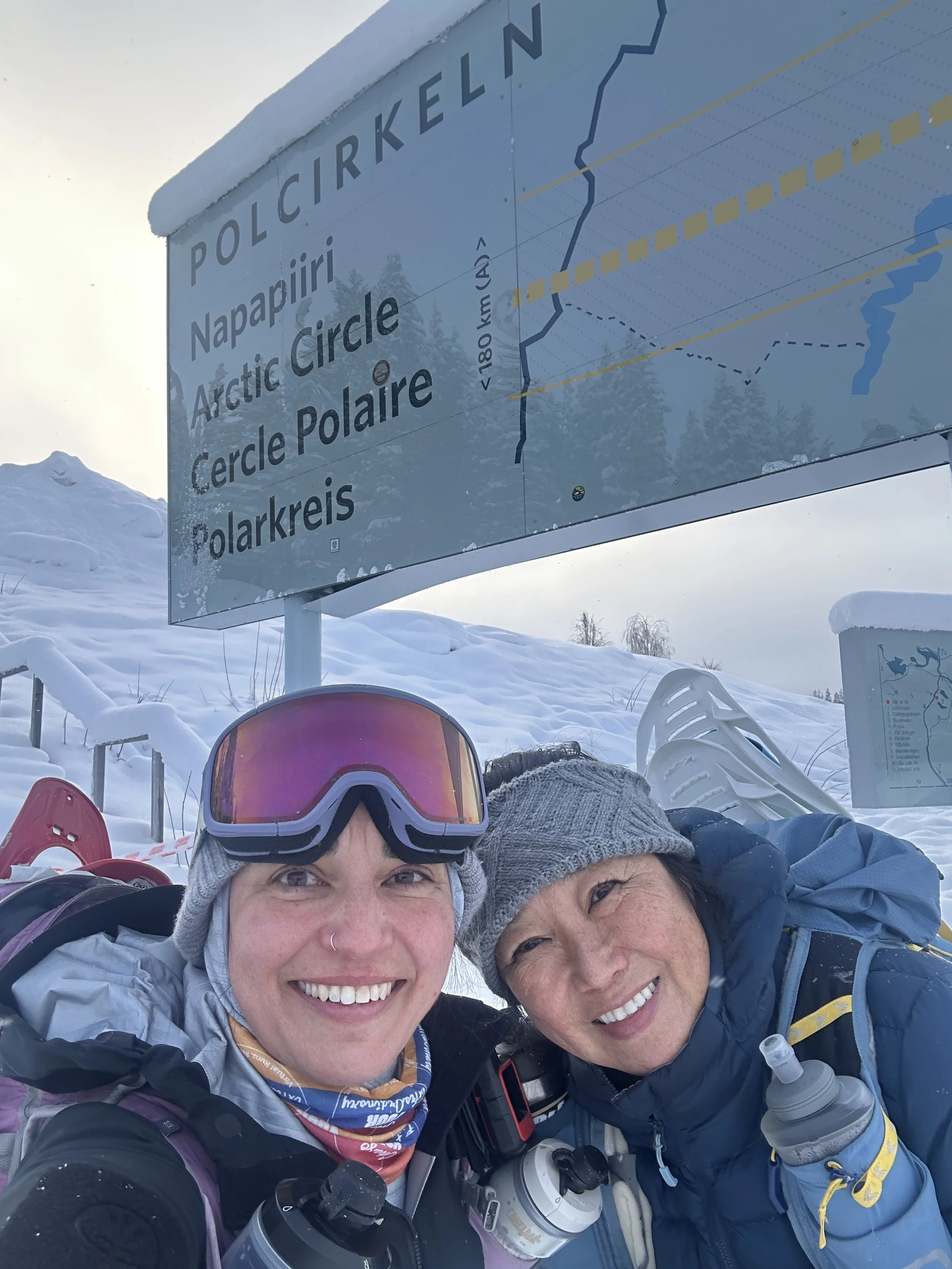
Rose and I on one of the many ice lakes
Instead, we decided to break the remaining distance down into manageable chunks. We had used a similar strategy during the final 12km of the Desert Ultra, although on that occasion the roles had been reversed. I had completely depleted, and it was Rose who had held us both together. Now it was my turn to return the favour.
Our plan was simple: run 400 metres, walk 100 metres, and repeat. My job was to call out the intervals.
We continued like this for around 10km until we reached the final checkpoint, but by then even the 400m run segments were starting to feel like a slog. So we adjusted the plan slightly and switched to 200 metres running followed by 50 metres walking. It felt far more manageable and allowed us to keep moving consistently. I worked out that it took us 64 cycles to cover the 21km.
Using this strategy we covered the remaining kilometres to the stage finish, arriving just after 4pm. Job done and with an unexpected bonus hour for extra recovery time. Three stages down.
Next up: the long stage
Stage 4 – Sami
65km | 1080m | 16hrs 56mins
This stage is named after the Sámi people, the Indigenous people of northern Scandinavia, who have lived in this region for thousands of years. Traditionally reindeer herders, they have a deep, generational understanding of this harsh and unforgiving environment, and are far more attuned to it than anyone passing through. Many of them also form part of the local ground team supporting the race, which feels particularly fitting given how much we rely on their knowledge and experience out here.
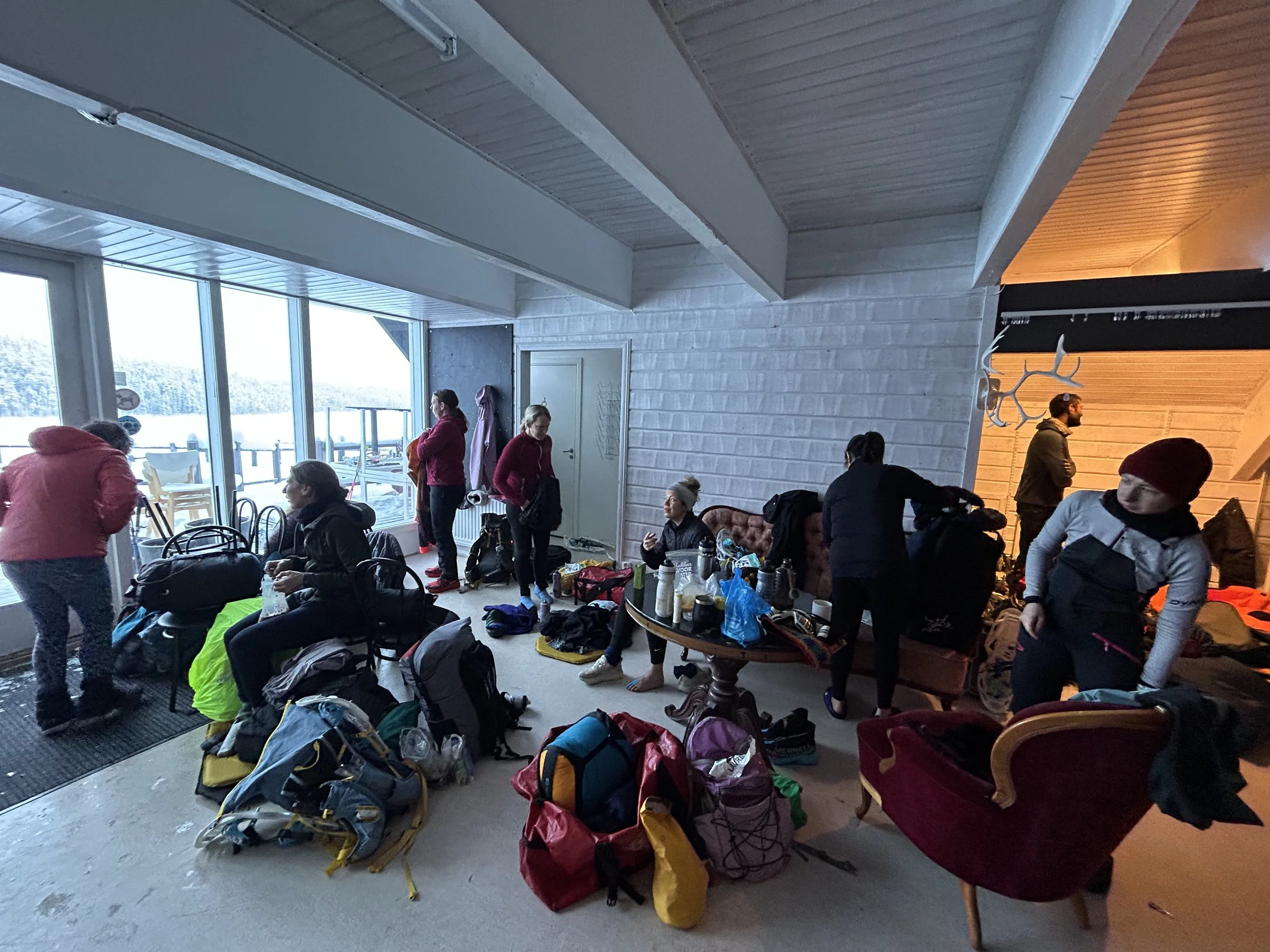
My alarm woke me at 4:30am. Our accommodation was a large pavilion with a wood burner in the centre and everyone sleeping in the same space — all 38 of us. I had actually slept quite well, but the evening before I’d felt completely overwhelmed by so many people in one room, all trying to do their race admin, eat, change clothes and organise their kit, mostly in the dark. In the end I bundled myself into my sleeping bag and left the bulk of my race admin for the next morning, which is something I would normally avoid, but it had all felt a bit too much the night before.
Upon reflection, the mental and emotional energy it took to complete each stage had completely depleted my social battery, and by the end of each day I had very little left.
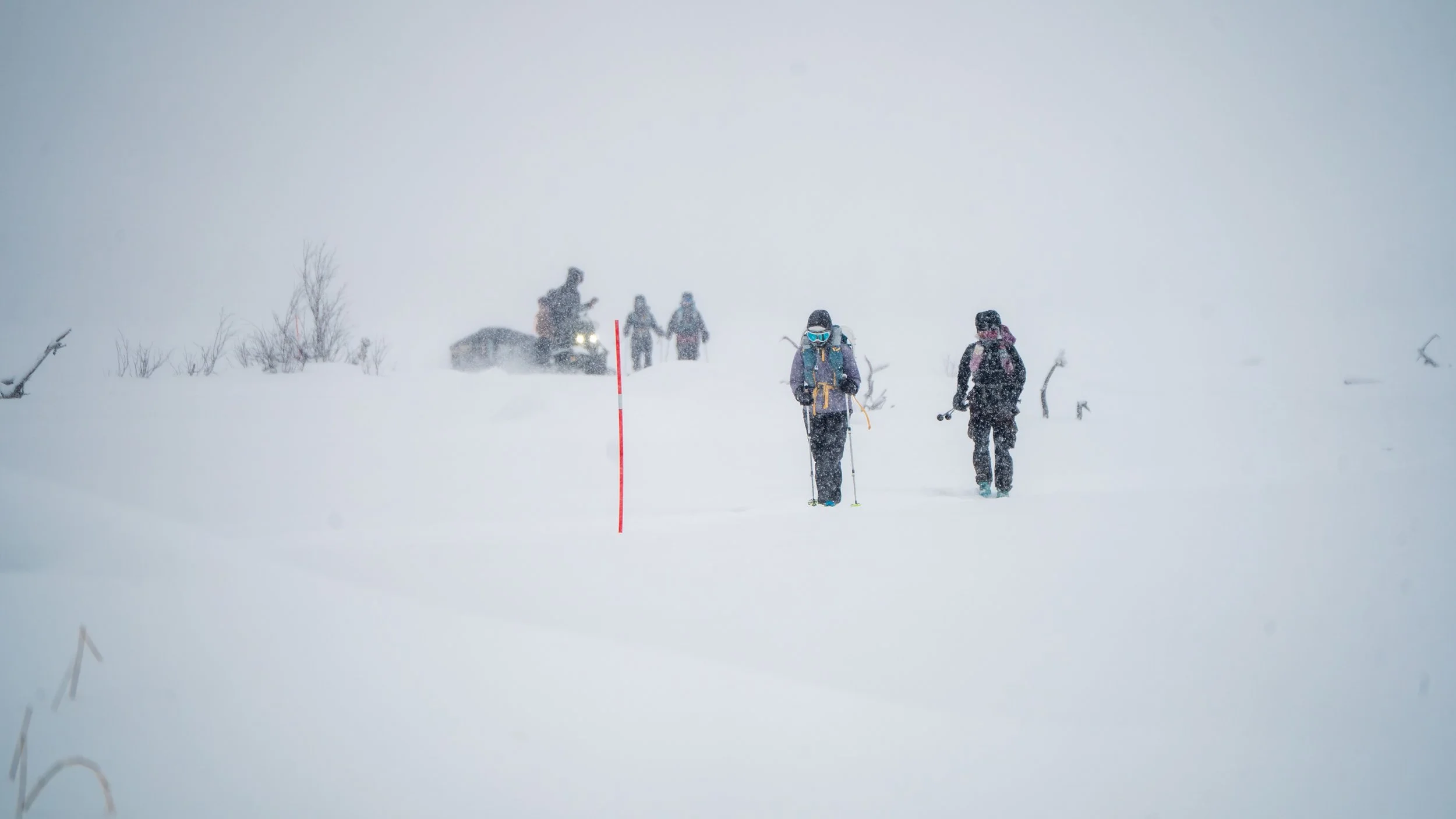
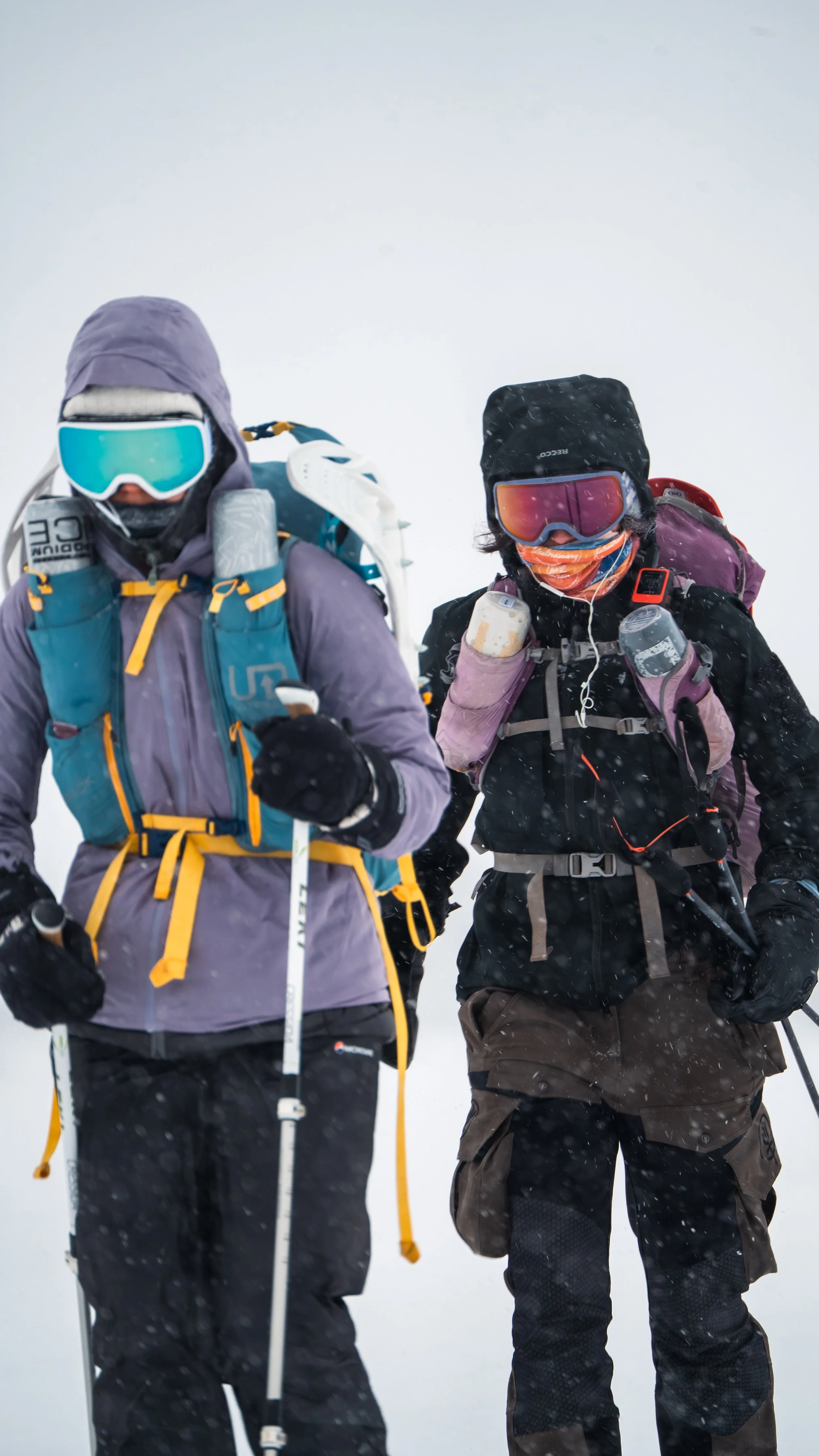
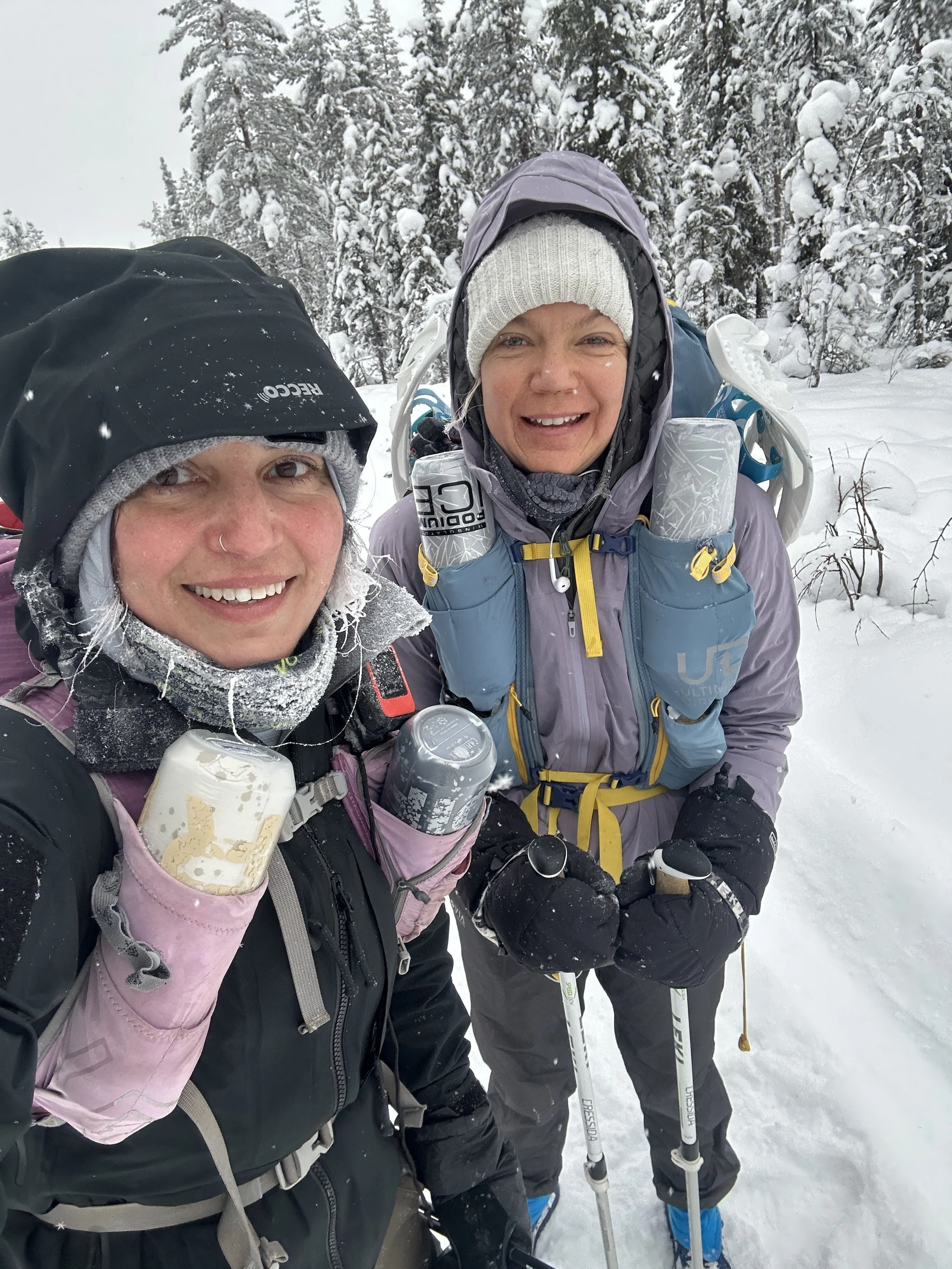
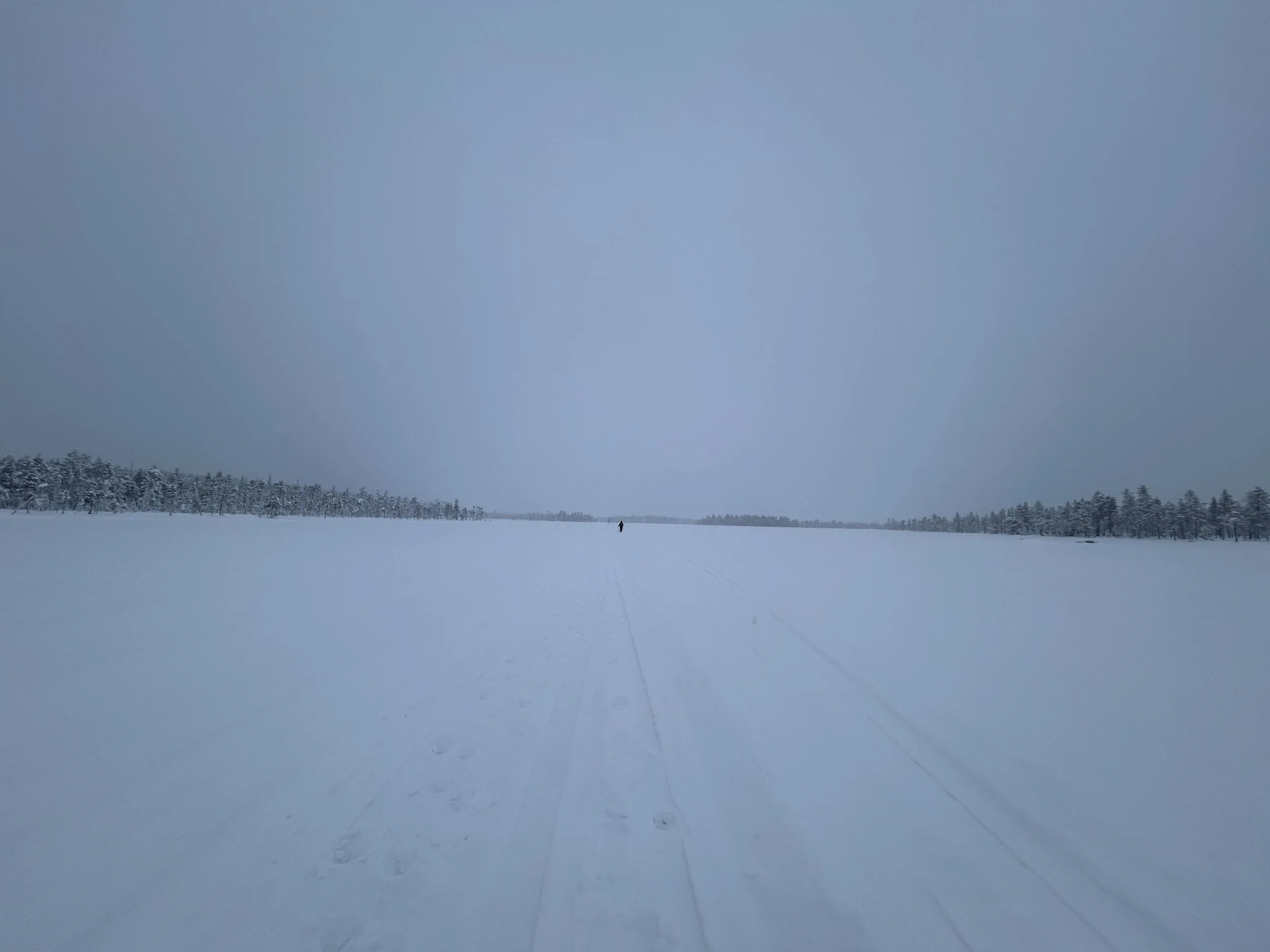
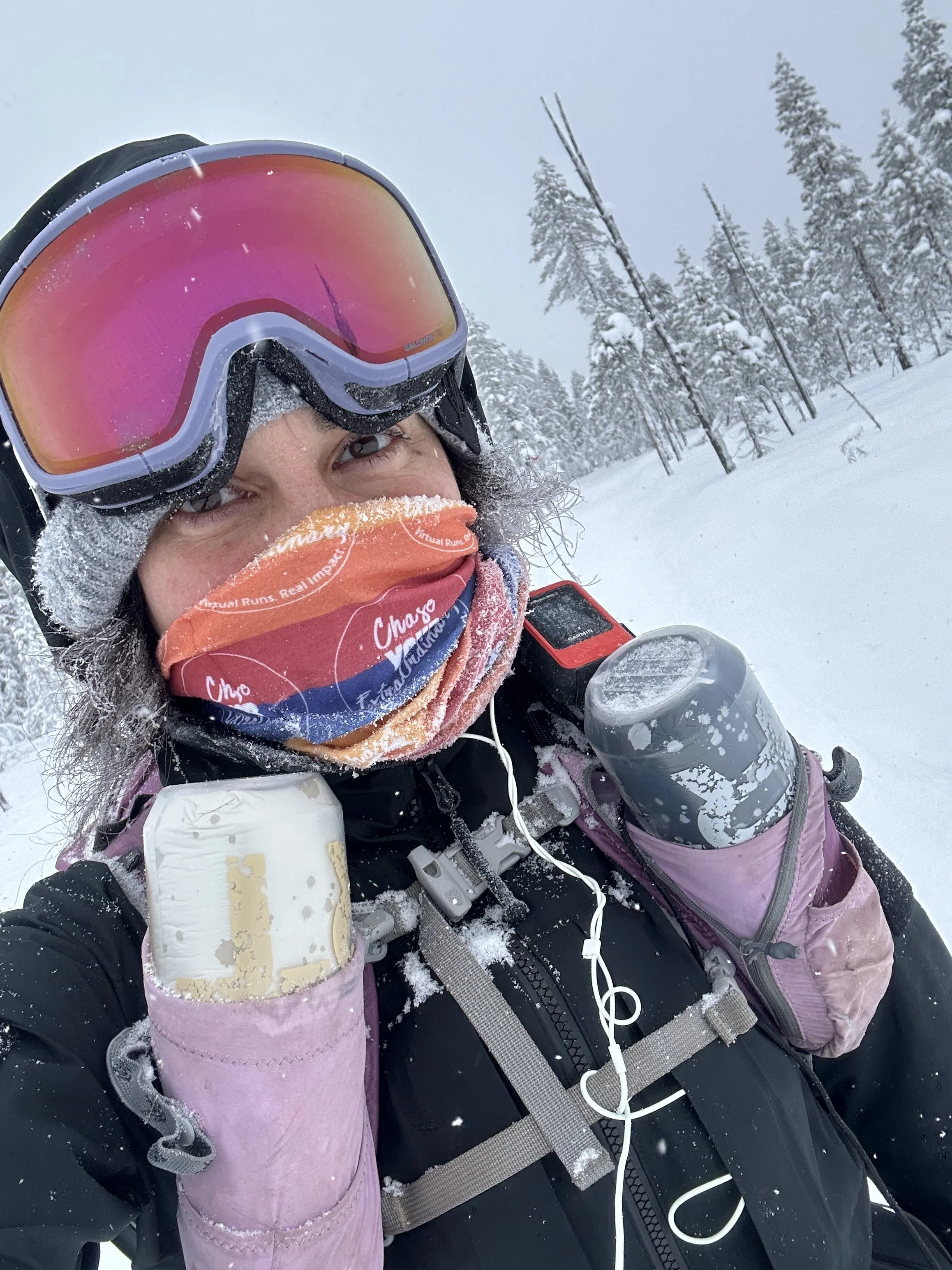
Up until this point we had been relatively lucky with the weather, even though the terrain underfoot had been tough. But of course this was the long stage, so the weather decided to close in and add a little extra drama to proceedings. Snow was falling heavily and visibility was poor.
The first 20km was mentally tough and it wasn’t a great start for me.
I lost my mum last August, just twenty months after losing my dad. Although I hadn’t invited grief into this race, the long silent days meant I had a lot of time inside my own head. I found myself sitting firmly in the pain of that loss. I struggled to find my groove until checkpoint two, where Kris, one of the race directors and also a friend, was seeing runners in.
He could see that I was teary and, without either of us saying anything, I sensed that he knew exactly where my head was at. He gave me a hug and a knowing nod and in that moment, simply feeling seen and understood shifted something inside me. Neither of my parents would have wanted to see me like that, particularly during something that was already such a tough challenge. Outside, the snow was still falling heavily, but the internal fog had finally lifted.
Leaving the checkpoint I felt driven and motivated again. There was still just over a marathon to go but I knew we could do that.
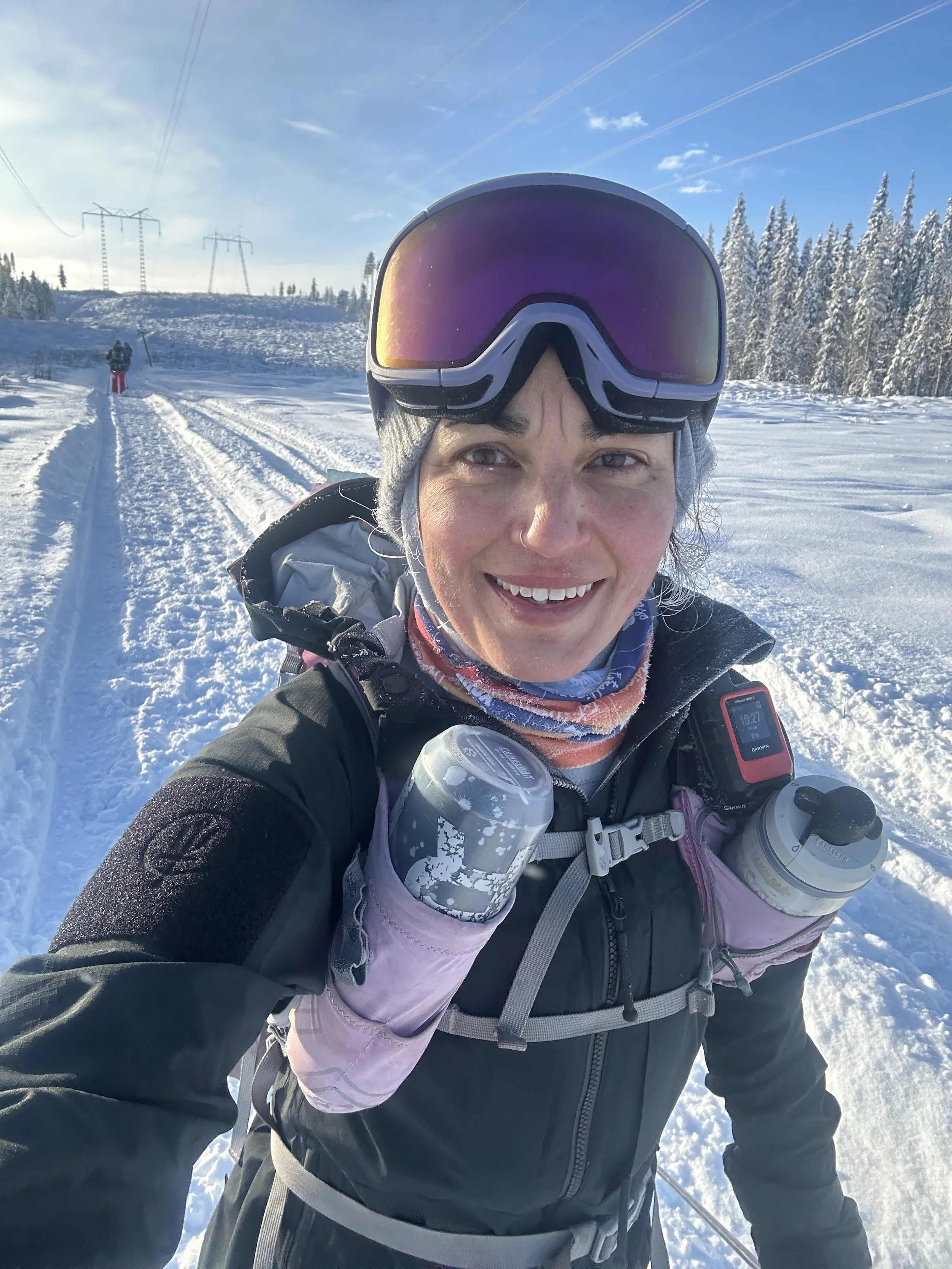
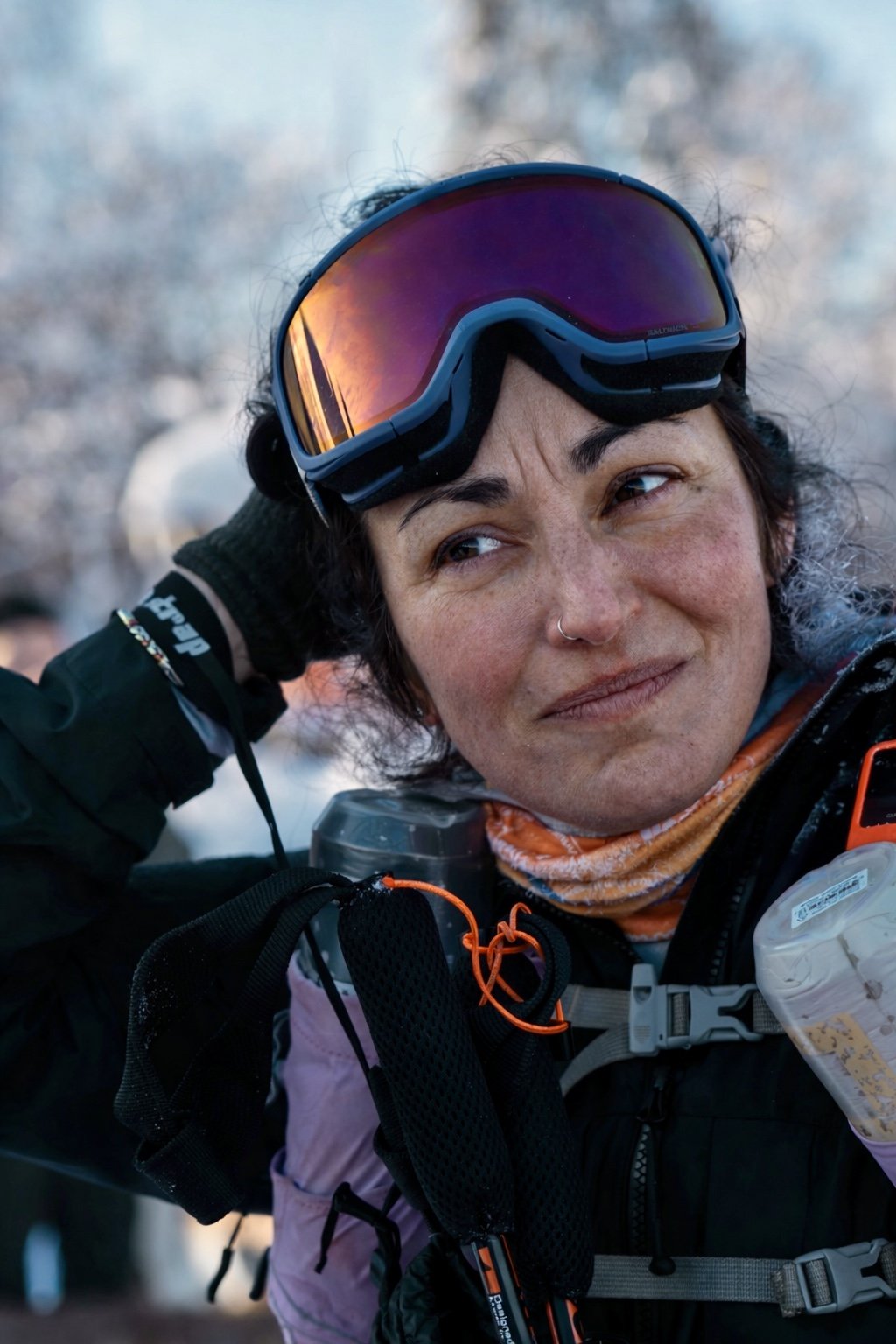
I’d barely worn my goggles all week but with the snow blowing directly into my face it was becoming difficult to see, and my cheeks were burning from the cold. I pulled them down from my head only to realise they had frozen on the inside, which meant I couldn’t see anything at all. It was the lesser of two evils, so I kept them on and every now and again Rose would shout to let me know I’d drifted off the path.
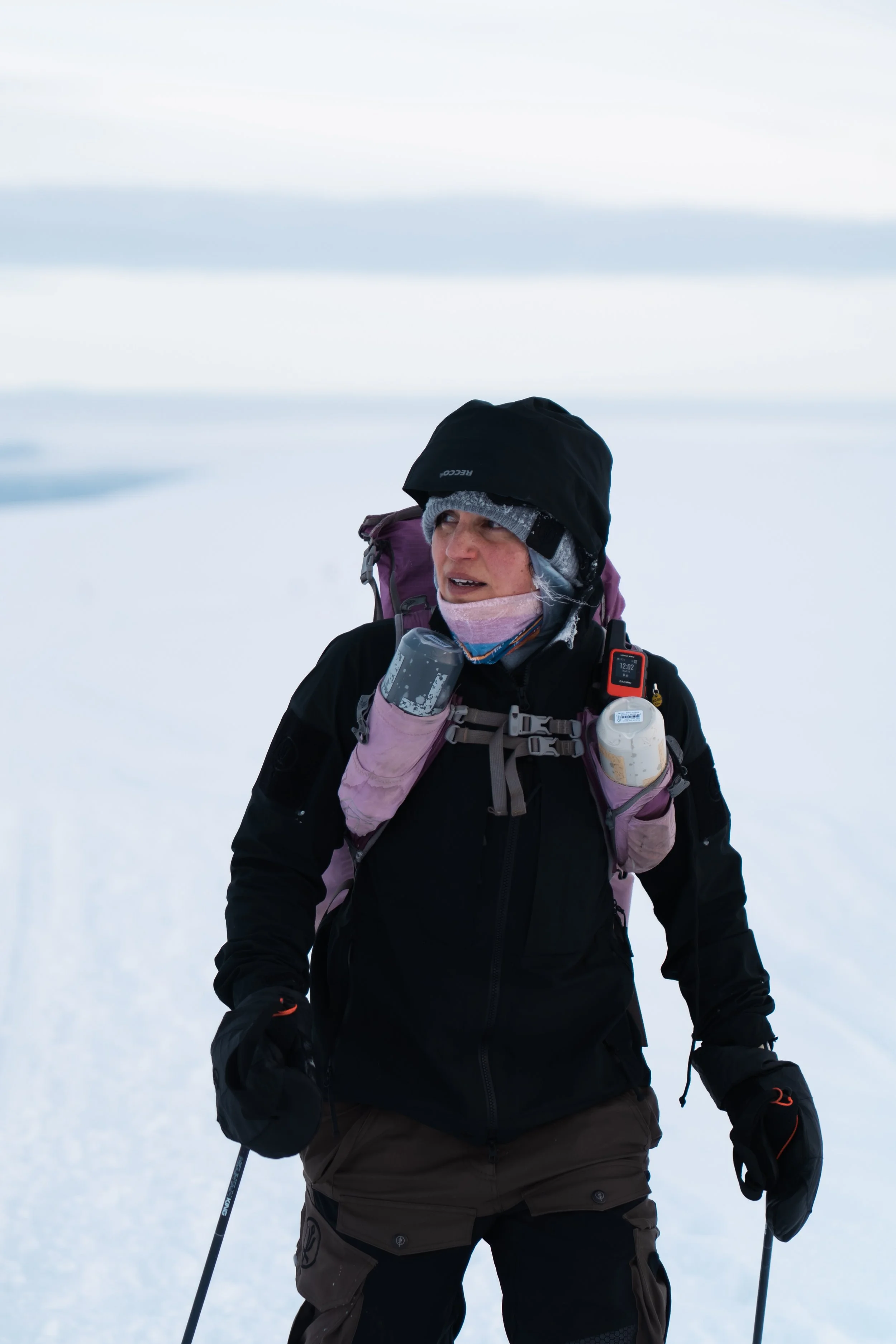
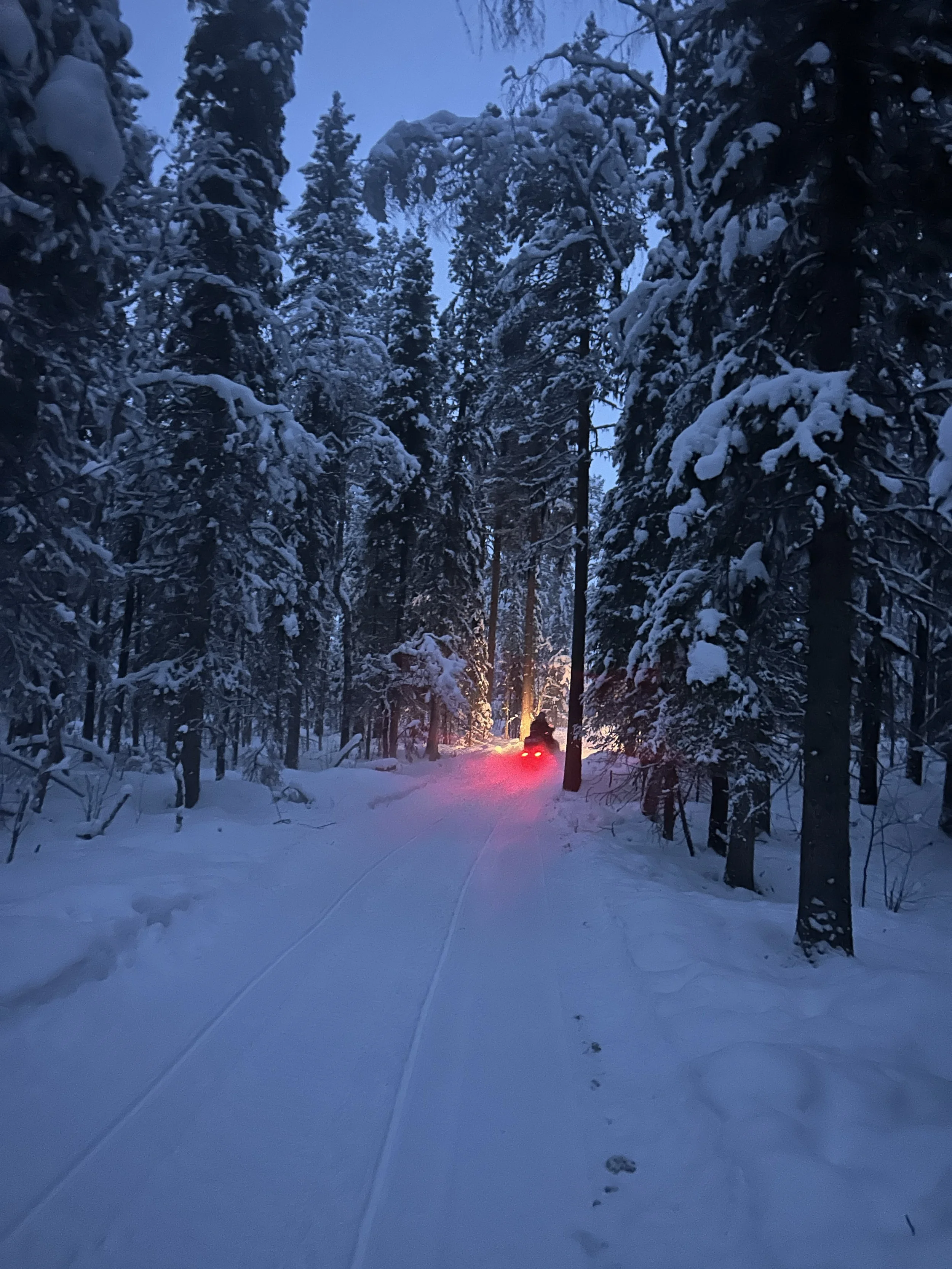
We kept moving through forests and across frozen lakes. It was bleak and we barely spoke for what felt like hours. We just had to keep our heads down because we needed to reach the 50km checkpoint by 7pm to make the cut-off and be allowed to continue the remaining 15km. Anyone who didn’t make it in time would be pulled from the course for safety and logistical reasons.
Somewhere between checkpoints two and three Rose took a fall. She was okay but had pulled her glute which added another layer of pain for her. We were frustratingly slow but we also knew we were doing everything we could to keep moving forward. It hurt Rose to run and it hurt me to walk, so like we had done previously I would run ahead and then wait for her.
Grief found its way back into my race again. All I could think about was how much I wanted a hug from my mum and to hear both her and my dad tell me how proud they were. There were so many moments where I wanted to send them a photo or a voice note. The tears ran down my face as the reality of never being able to do those things again hit me hard.
Upon reflection, I probably needed that moment, even if I hadn’t invited it in. Grief is a twat like that.
We reached the checkpoint with thirty minutes to spare. I never imagined it would take us twelve hours to cover 50km, but this race was seriously kicking our butts and it felt like a constant battle against the Arctic tundras. It was now dark and still snowing, and by this point most of the other runners had finished the stage and were tucked up in a warm room. We were among the final five runners still out on the course and still had 15km to go. But now that we had made the cut-off, the pressure was off. We simply had to finish the stage in whatever time it took.
We took a little extra time at the checkpoint to eat a hot meal, reset ourselves and layer up for the long, cold night ahead. Rose and I were both exhausted, but at that moment I was certain we would finish.
Then Rose looked at me and said, “I don’t think I can go on.”
In that moment it felt like the ground disappeared beneath my feet.
“WHAT?! I’m not doing this alone and I’m certainly not stopping with only 15km to go. We are absolutely finishing this together.”
And that was the end of the discussion.
I had thrown my tantrum back on Stage 2 coming down Kabla. Now it was Rose’s turn. In the hundreds of miles we have run together we have never had a simultaneous meltdown, but if it ever happens I imagine it would look something like Armageddon.
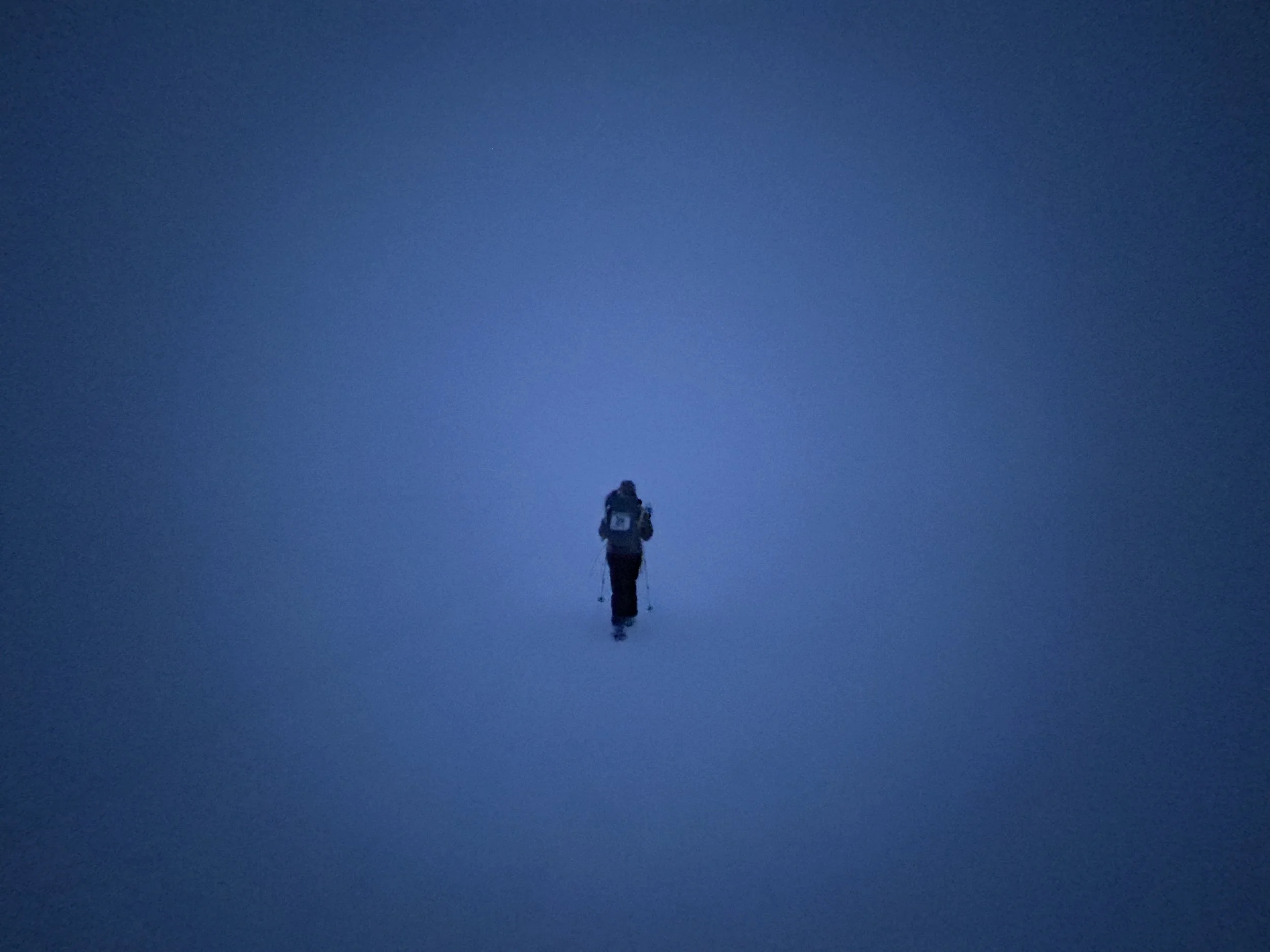
Rose heading into the Abyss
And so we carried on, with just one final checkpoint to reach before the end of the stage. The finish felt both incredibly close and impossibly far away. I had been dosing myself with codeine and paracetamol throughout the day, but my next dose wasn’t due until the final checkpoint, so my plan was to take it there and let it carry me through the last 8km.
The next section hinted faintly at civilisation as we passed through what appeared to be some sort of graveyard. In the dim light I could just make out crosses emerging through the deep snow. Far in the distance there was a faint haze of light which I believe was Jokkmokk, the town where we would finish the race the following day.
Our stop at the final checkpoint was brief. It was manned by the Sami team and by this point the pain in my ankles was almost unbearable. I moved quickly to execute my plan of taking more pain relief for the final stretch, only to be told that this was the one checkpoint on the entire course without medics.
My heart sank. Why hadn’t I taken some tablets from the previous checkpoint to carry with me? There was nothing for it now. I simply had to suck it up and keep moving. Every step felt as though my ankles might snap.
There were just three of us left on the stage now — myself, Rose and a lovely guy called Rob, who Rose had run with earlier in the week.
The final 8km felt like the longest hike of my life. After holding my mindset together all day, the news about the pain relief finally broke me. This was probably the lowest point I had reached in any race. All I wanted to do was call my mum, because she always knew exactly what to say.
After giving me a good scolding, I can almost hear her voice now:
“Ave Maria, this bloody little girl. Why on earth do you do this to yourself? Come on my darling, one foot in front of the other. You can do this.”
And so we did.
Seventeen hours after setting off that morning, we finally reached the end of the stage where race directors Kris and Simon, along with photographer Björn, welcomed the three of us in with open arms.
I’m not ashamed to admit that I cried tears of relief, exhaustion and sheer overwhelm.
We had completed the long stage and I had absolutely nothing left to give.
This was the race I came for.
Stage 5 – The Sprint
14km | 206m | 3hrs 15mins
I woke early, even though we had a much later start of 10am on the final day. After the long stage the day before, I had been so exhausted that I’d simply collapsed onto the floor in the middle of the room we were all sleeping in, without giving any thought to the fact that I was directly in the way of people heading to the toilet throughout the night. I couldn’t even be bothered to move. Everything hurt, and it somehow felt easier to be stepped over — or on — than to find the energy to relocate.
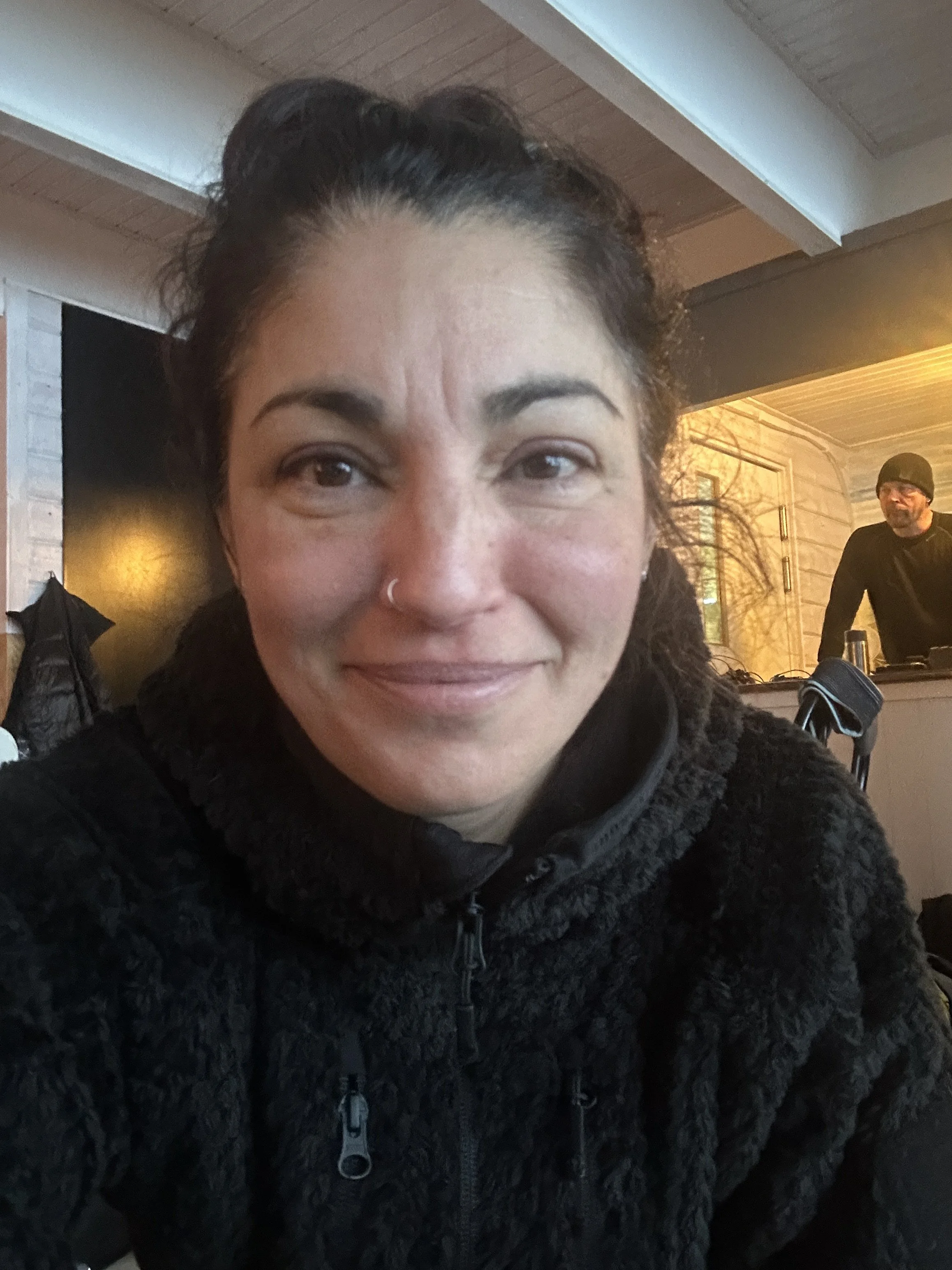
My swollen face after the long day
My face felt strange. I could tell it was swollen, so eventually I mustered the energy to make the 30-metre hobble down to the toilets at the bottom of the hill. These were proper flushing toilets with hot running water — a real luxury after days of either squatting in the snow or perching on a wooden bench over an open tank of previous users’ ablutions.
I caught sight of myself in the mirror for the first time in days, aside from the occasional phone selfie. My face had ballooned like a puffer fish and my skin and lips were dry, cracked and sore. It was quite a sight, but it really brought home just how harsh the environment had been and what we had put our bodies through over the past few days. Strangely, I felt proud of how I looked.
And so, once again, we found ourselves standing on the start line of a new stage — only this time it was the last one. Just 15km to the finish. BTU label this stage “The Sprint,” and it isn’t lost on me that whoever named it has a very dry sense of humour.
The sun was shining and spirits were high. Sadly, several runners had been withdrawn the day before for various reasons, including frostbite. These races tend to have small fields, and strong bonds form quickly, so it’s always difficult to see people not make it to the end. But in true fashion, many of them still came out to cheer us on for our final stretch, which couldn’t have been easy for them.
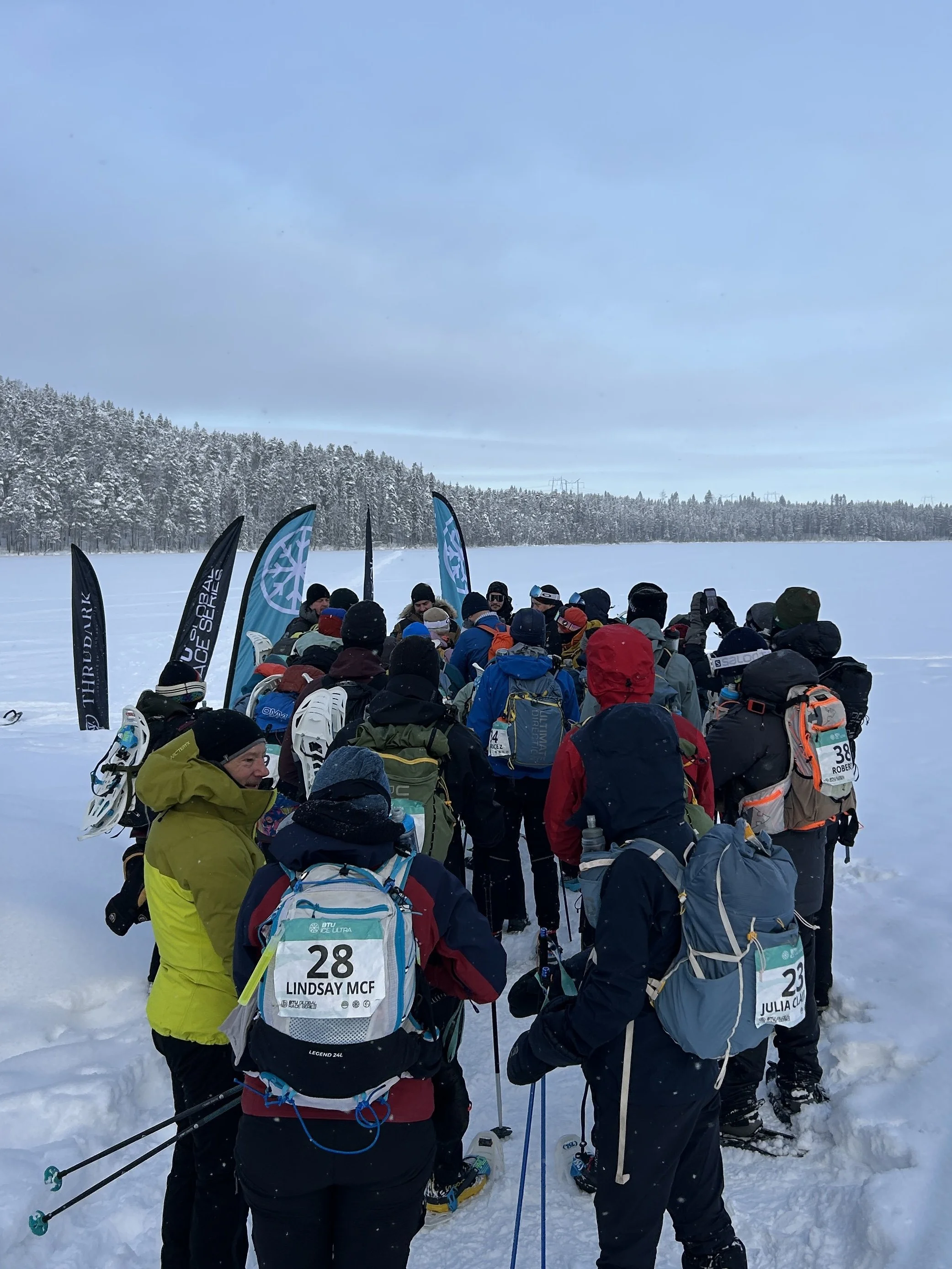
Kris and Simon gave the final countdown and we were off. In just a few hours — I estimated around three — we would be finished, likely with a beer in one hand and a burger in the other.
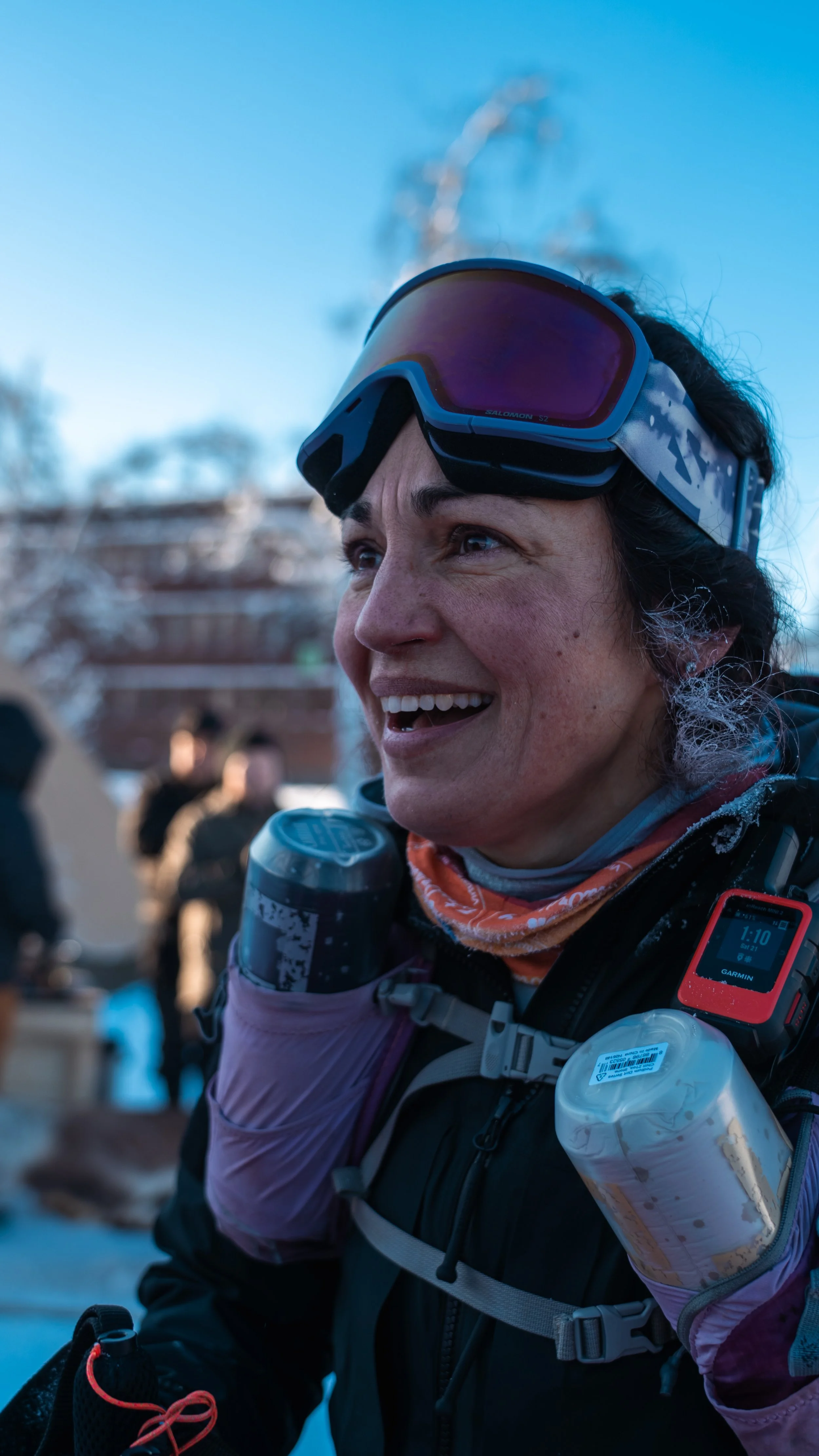
It was a beautiful, clear day and the Arctic looked more magical than ever. As the course gently undulated towards Jokkmokk, Rose and I ran alongside Rob, who we had finished the long stage with the night before. We chatted, took photos and, more than once, stopped to simply look around and take it all in. It is one of the most beautiful places on earth, and soon our footprints would fade into the snow and it would all become a distant memory. There’s something quite sad about that feeling.
There was just one checkpoint to pass through, and as we arrived we were greeted by a pack of huskies pulling sleds, led by members of the Sámi people. It was incredible to see. We thanked the team for everything they had done for us throughout the week and left the checkpoint feeling lifted.
As we approached Jokkmokk, signs of civilisation began to appear — dog walkers, families out for a stroll, a couple of runners, buildings. We hadn’t seen any of this for days, and it felt strangely intrusive. I felt like an Arctic explorer emerging from the tundra after months away from the outside world.
We crossed the final ice lakes, ran through a park and into the town. My watch showed we had just a couple of hundred metres to go and the excitement began to build.
We crossed a couple of roads and turned left around a corner.
There it was.
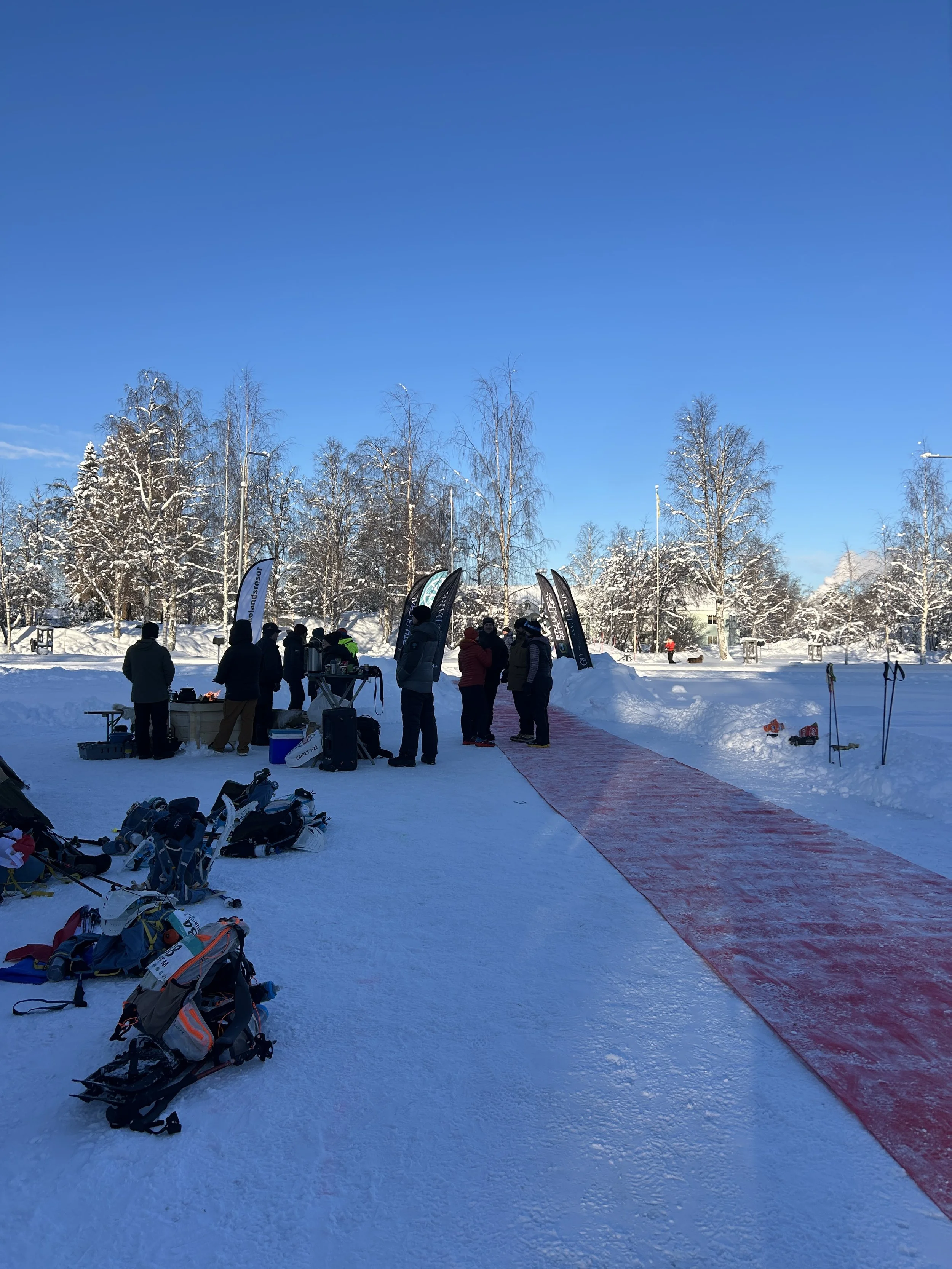
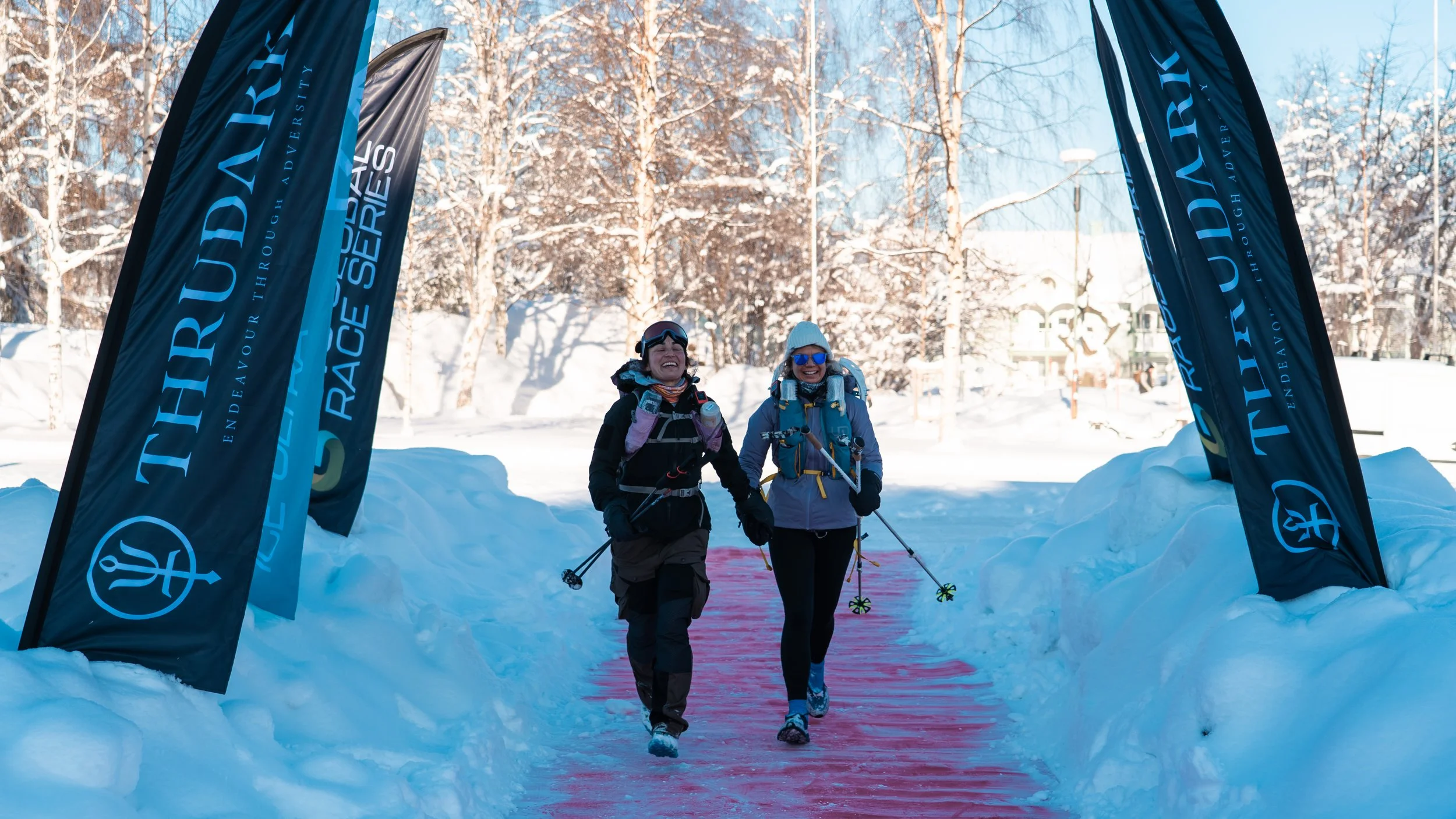
About 50 metres ahead I could see a small crowd, the BTU and Thrudark flags, and hear music playing. All the emotions hit at once. I turned to Rose — we were both glassy-eyed — and without saying a word, we shared a knowing smile. Once again, we had done it.
We picked up the pace — perhaps this really was “The Sprint” after all — and as we reached the red carpet, I grabbed Rose’s hand. We crossed the finish line together, shoulder to shoulder.
Closing Reflection
The Arctic has a way of stripping everything back to the absolute basics.
Warmth. Movement. Forward progress.
Out there, none of the usual distractions exist. There is no noise, no urgency beyond the next step, no space for anything other than what is directly in front of you. And in that silence, you are left alone with your thoughts — whether you invite them in or not.
I came into this race to challenge myself physically, to step outside of my comfort zone and experience an environment that was completely unfamiliar to me. What I didn’t expect was just how much of a mental and emotional journey it would become.
Grief has a way of finding you, no matter how far you run.
Somewhere between the frozen lakes, the endless snow-covered forests and the long, dark hours of the long stage, I found myself sitting with it in a way I hadn’t allowed before. It wasn’t something I had planned for, but perhaps it was something I needed.
The Arctic didn’t just test my endurance — it forced me to slow down, to feel, and to face things I had been too busy to confront.
There were moments where the race felt overwhelming. Moments where my body hurt more than I thought it could. Moments where I questioned whether I could keep going.
But there were also moments of clarity, of connection and of quiet strength.
Moments where a hug said everything that words didn’t need to.
Moments where friendship carried more weight than any individual performance ever could.
I started this race wanting to compete. Somewhere along the way, that shifted. It stopped being about pace or position and became something much more fundamental — resilience, humility and the ability to keep moving forward when things feel hard.
And in the end, that felt far more important.
The Arctic is vast, unforgiving and, at times, brutal. But it is also breathtakingly beautiful, grounding and deeply honest. It gives you exactly what you need, whether you’re ready for it or not.
I left a piece of myself out there in the snow.
But I also brought something back with me — a deeper understanding of what I’m capable of, and a quiet reminder that even in the hardest moments, forward is always an option.
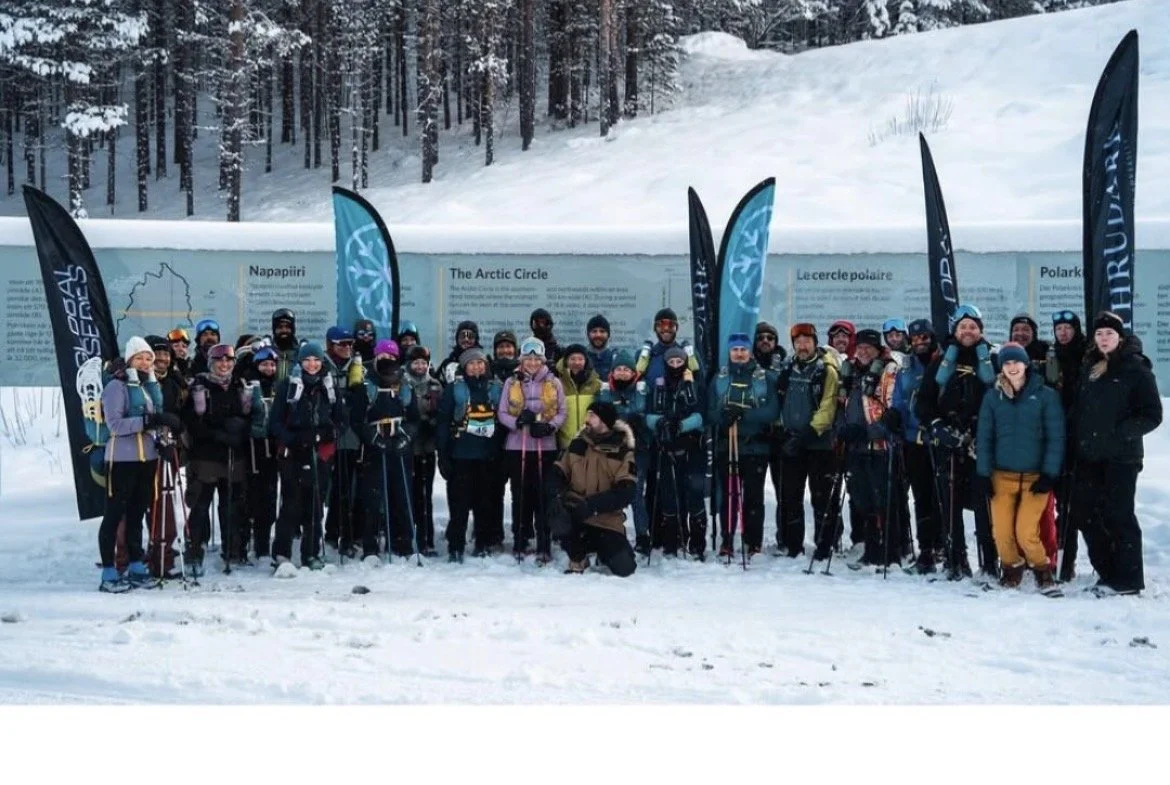
What a tribe
Photo credits to Beyond the Ultimate, Trail Bear Films and other trail pals. Big thanks to my sponsor Voom Nutrition for keeping me well fuelled and also to Thrudark for kitting me out.